LANDING · SAAS DEV
SaaS development by specialists.
Multi-tenant SaaS platforms with a fixed price after intake, built our standard way.
Book an intro →
Multi-tenant SaaS platforms with a fixed price after intake, built our standard way.
Book an intro →What custom SaaS development costs at NedDev is fixed after a short intake: a focused platform is the starting point, and the price goes up as you want more modules, clients and integrations. We build built for multiple clients on Laravel with the admin area for the backend and Next.js for the frontend, so one codebase grows from your first client to hundreds of companies with separated data. A first working version is usually live in 8 to 14 weeks. You get a platform built for growth that does not have to be rewritten halfway. NedDev is a Rotterdam studio, KvK 65641922.
Custom SaaS development means you have software built that clients use as a service through their browser, for a fixed monthly amount, without installing anything. The difference with ordinary software is that a SaaS platform serves multiple clients at once from a central codebase, while each client's data stays strictly separated.
The price depends on the number of modules, the complexity of the roles and permissions, and the integrations you need with, for example, an accounting package or a payment service. A focused platform with a clear core function is cheaper than a broad platform with invoicing, time tracking, document signing and AI built in. We advise starting with the core that clients truly need and then expanding deliberately.
What the price of a SaaS platform depends on:
The heart of a scalable SaaS platform is built for multiple clients architecture. That means each client company, or each tenant, runs on the same codebase but has its own walled-off environment and data. One update reaches all your clients at once, without their data getting mixed up. Build this in only later and you almost always have to rewrite, and that is the most expensive lesson in SaaS.
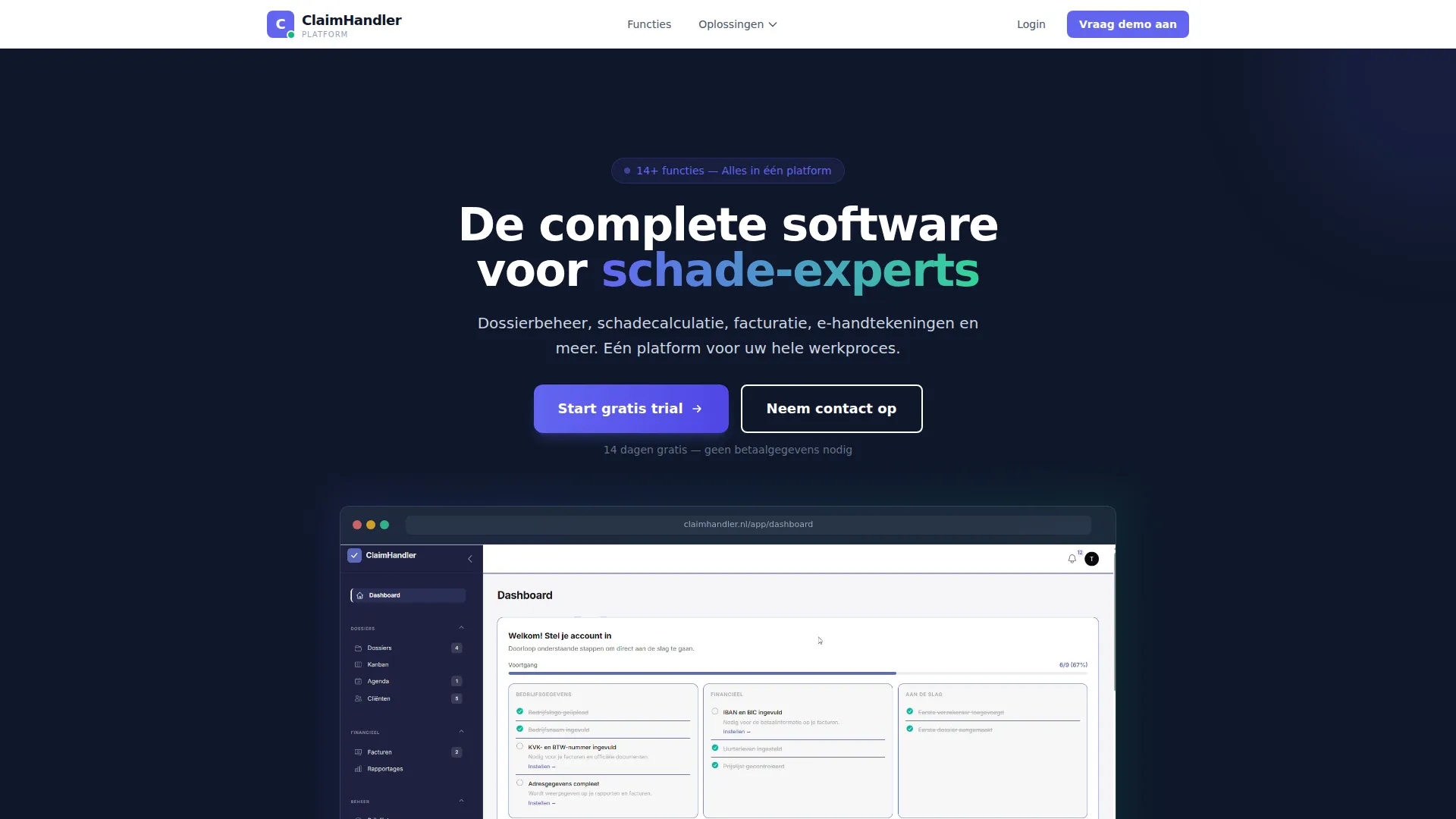
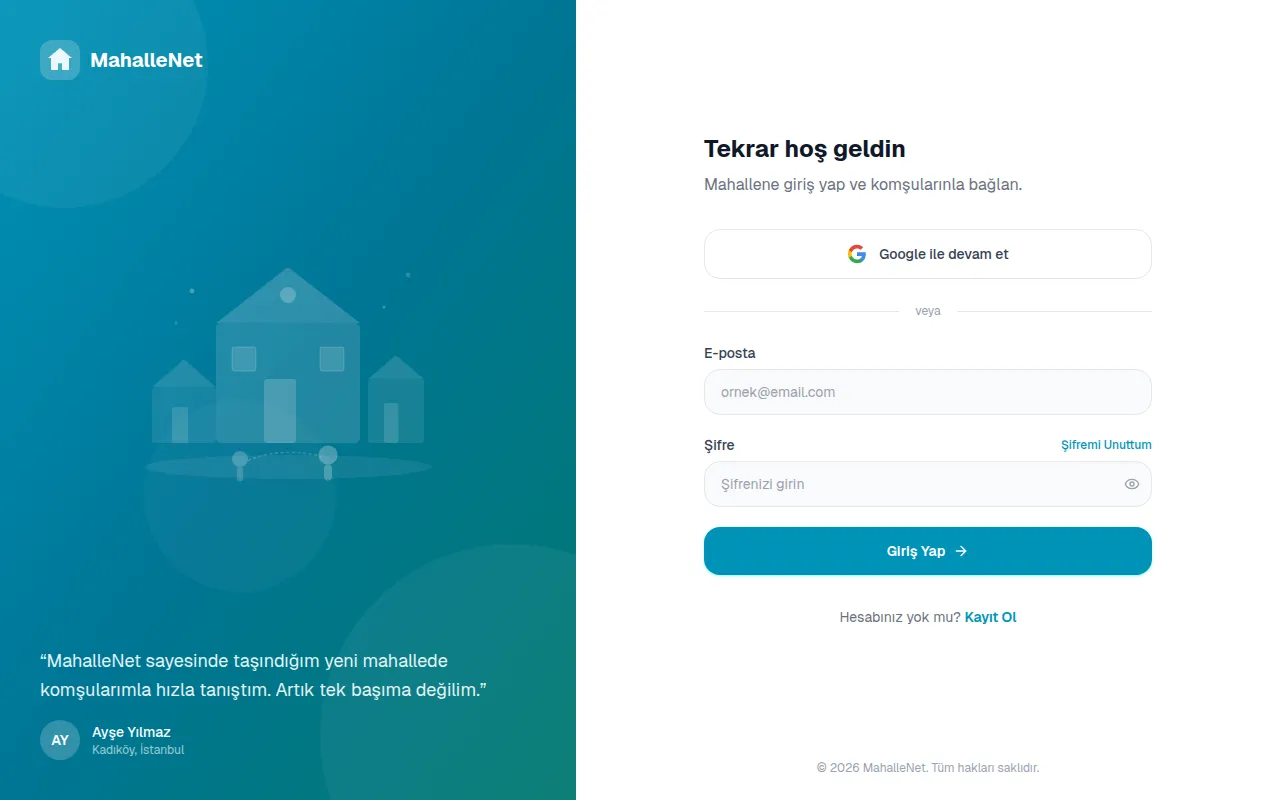
We build the backend on Laravel with the admin area, a combination that lets us quickly set up a solid admin environment and strong roles and permissions. The frontend runs on Next.js for speed and findability. For ClaimHandler we built a SaaS platform for loss adjusters with invoicing, time tracking, document signing and email integration, now serving clients in production. For IndexNu we delivered a built for multiple clients accounting tool, and for Mahallem a platform on the same footing.
Why built for multiple clients and not a separate version for each client? Because separate versions become unmanageable. With ten clients you have ten times the same maintenance, ten times the updating, ten places where something can go wrong. Multi-tenant means you improve the platform once and all clients benefit, while their data stays watertight separated.
What you get with custom SaaS development:
Most SaaS projects get stuck because they start too broad. Someone wants everything the competitor has too, the project stretches out, and the first paying client never arrives. We cut it up. First the module clients truly need and are willing to pay for, then expand based on what users ask for in practice.
The step-by-step plan for custom SaaS development with us:
Can I start with a small version and scale up later? Yes, and that is exactly what we recommend. Because we build built for multiple clients and scalable from the first week, you do not have to rewrite anything as you grow. You start with the core and build out module by module, without the foundation slipping out from under you.
Reliability in production is not a side issue. For platforms with client data we always log on critical flows such as payments, uploads and email, with try-catch and monitoring, so a user's problem is traceable. For the choices around data processing and processor agreements we hold to the guidelines of the Dutch Data Protection Authority, see autoriteitpersoonsgegevens.nl. When your platform needs AI, we connect that to our approach to AI development.
SaaS makes sense when many companies have the same problem and are willing to pay monthly for it. That can be a niche market the big players skip over, or a process now handled with loose files and emails that is crying out for a central system. The common thread is repetition: the same problem, at many clients, solved by a platform.
A common mistake is building a platform for a market that is not asking for it. So we first think along about whether SaaS is the right form before we write a line of code. Sometimes a simpler product is smarter, sometimes the market is not yet ready. Honest advice up front saves an expensive project that nobody uses.
When SaaS is the right choice:
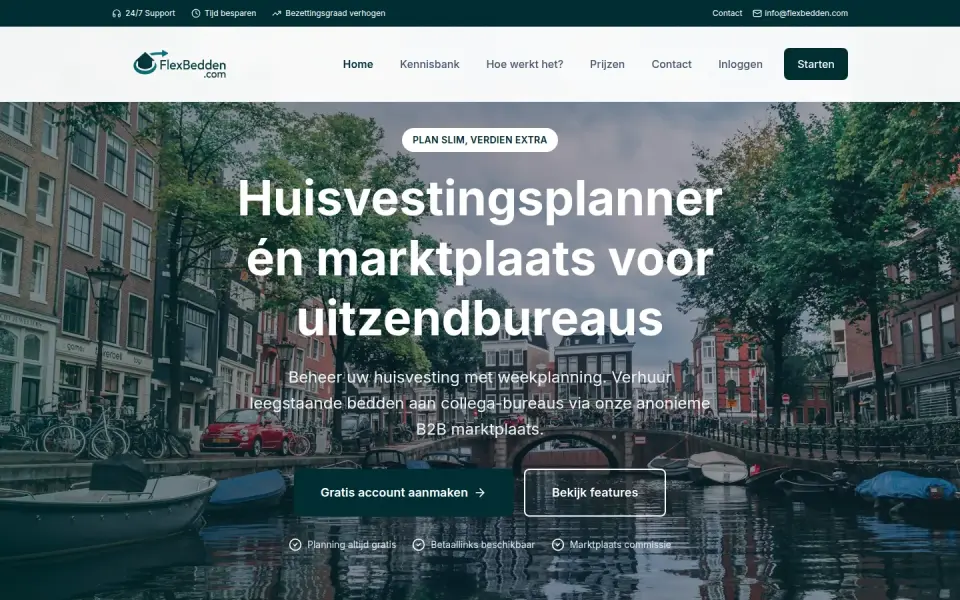
For the care sector we built FlexBedden, a platform that makes available beds and capacity manageable. It shows how a focused problem in a specific market produces a strong SaaS product. Want to know whether your idea lends itself to a platform? Take a look at our approach to SaaS development.
Our own base for multi-tenant SaaS: a Laravel + Filament starter, audit trail and tenant management. We build client platforms on it.
Used internally EDITORIAL · LONG-FORM ↗What we write down as we learn it. Case studies, technical write-ups, design decisions. No content marketing, just real knowledge.
42 articles RESEARCH · AI EXPERIMENTS ↗Side projects and R&D. Voice-agent prototypes, RAG pipelines, AI knowledge-graph experiments. Some become products. The rest teach us something.
455 examples in the LabCustom SaaS development with us starts with a focused platform with a clear core module. A platform with multiple modules, roles and payments takes more, and a broad platform with integrations to accounting, AI and document flows is the largest project, growing with the scale. The price mainly depends on the number of modules, the complexity of the roles and permissions, and the integrations. Alongside the build you have ongoing costs for hosting, maintenance and, when using AI, for the model usage too. After a short intake you get a price that is fixed, and we always advise starting with the core clients are truly willing to pay for.
A first working version of a SaaS platform is usually live within 8 to 14 weeks, depending on the scope. We work in short sprints with weekly demos, so you see the platform grow and can steer before it is finished. A focused platform with one core module goes faster than a broad platform with payments, document signing and integrations. We lay the built for multiple clients foundation in the first weeks, because everything afterwards builds on it. After launch with the first clients we develop further based on real usage, because only then does it become clear which features clients actually use and which assumptions up front were wrong.
Yes, after delivery the full source code is yours, including the design, the admin environment and the documentation. You are not tied to us for management or ongoing development. You can have the platform developed further by us, but you can just as easily have it taken over by another team or take it into your own management. We deliver the code cleanly documented, so a successor can carry on with it without months of onboarding. That is a deliberate choice: with SaaS you build a business on the platform, and then you should not depend on a single supplier who can pull the plug.
Through built for multiple clients architecture from the first line of code. Each client, or each tenant, runs on the same codebase but has its own walled-off environment and data. At every level, from the database to the screens a user sees, we check which tenant a request belongs to. A user from one company can technically never reach the data of another company. For platforms where this is extra sensitive, such as with personal data or medical data, we build in strict isolation and log access. That is not an option added afterwards but the foundation: data isolation you build in later is almost never watertight.
Yes. For recurring payments and subscriptions we usually connect Mollie or Stripe, depending on your audience and the countries you operate in. We build the logic around it: creating and changing subscriptions, handling failed payments and tracking which client is on which plan. We always log on these flows, because an error in invoicing costs money straight away and has to be traceable. If you prefer to invoice yourself or work with another payment system, we connect to that. What fits we discuss up front, so the payment flow matches how you want to serve your clients.