SOLUTION · AUTOMATION
Automate your processes.
AI document extraction, workflow tools, integrations between legacy systems and modern SaaS.
AI document extraction, workflow tools, integrations between legacy systems and modern SaaS.
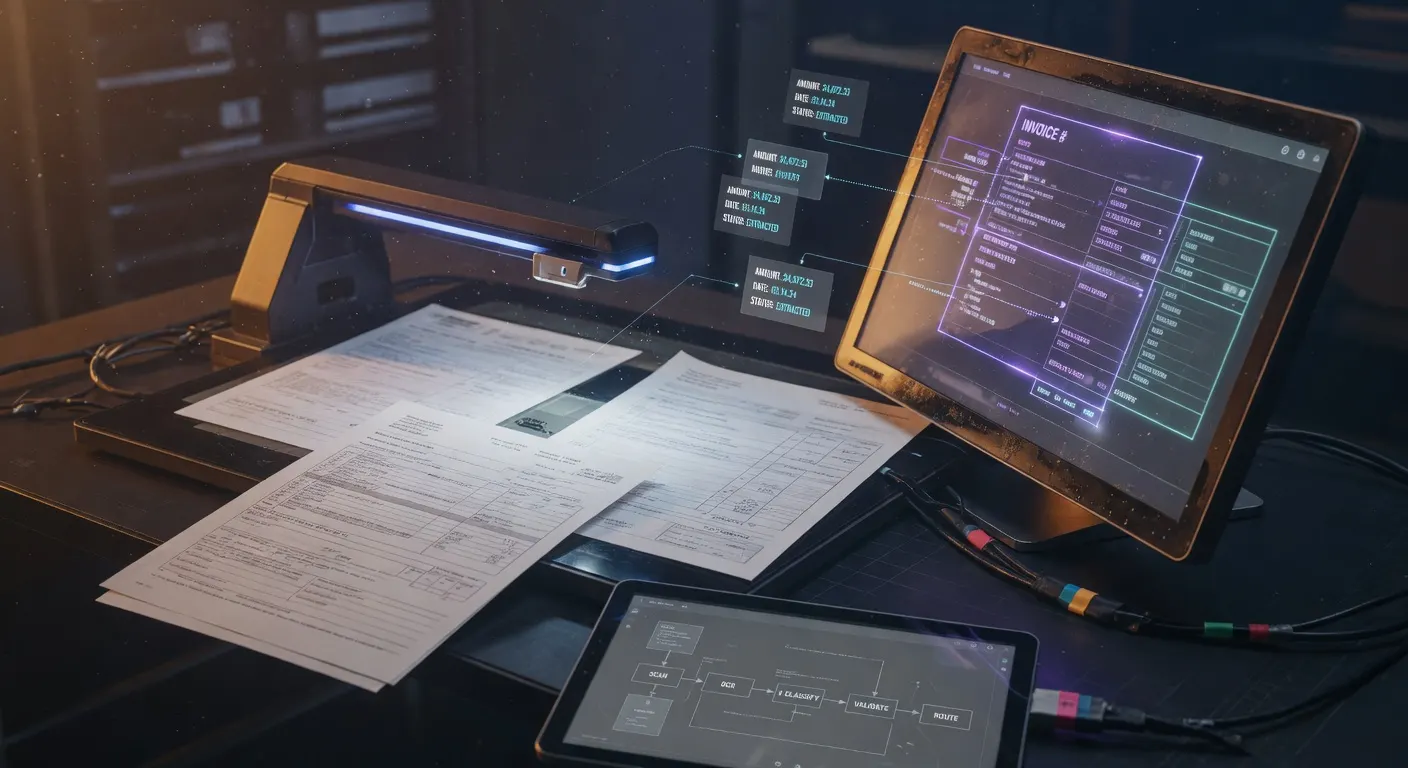
NedDev automates business processes with AI document extraction, workflow tools and connections between legacy systems and modern SaaS. Think of invoices or forms that read themselves, time tracking that flows through to the bookkeeping, and manual retyping that disappears. A first working automation is often in production within 6 to 10 weeks, after a short intake We build on Laravel 12 and connect via APIs, with logging and error handling on every critical step so nothing goes wrong quietly.
Process automation is replacing repetitive manual work with software that carries out the steps itself. An employee who retypes the same data from a PDF into a system every day is exactly the kind of work a well-built automation takes over. Faster, without typos, and without anyone finding it boring.
It goes further than a macro or a button. Real automation connects systems that do not know each other, decides based on rules or AI which route a document takes, and leaves a trail so you can see afterwards what happened. The goal is not technology for its own sake, but winning back hours and preventing mistakes.
Common applications:
Most failed automation projects start with buying a tool and hoping it fits. We flip that around. First we map out which steps a person takes now, where time leaks away and where mistakes arise. Only then do we decide what can be automated and what should stay human work. Not everything has to go: a good automation takes out the boring part and leaves the judgment to the person.
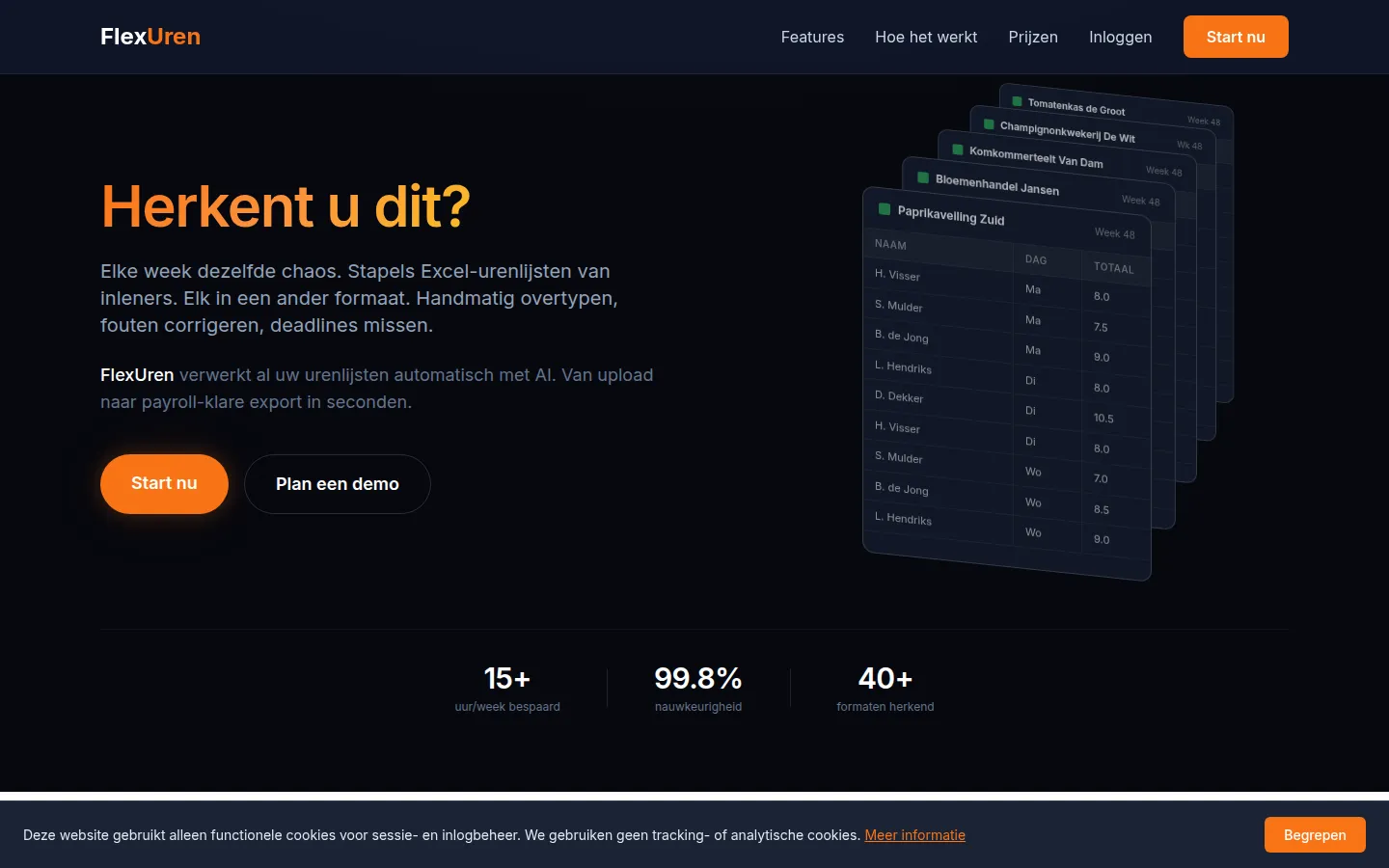
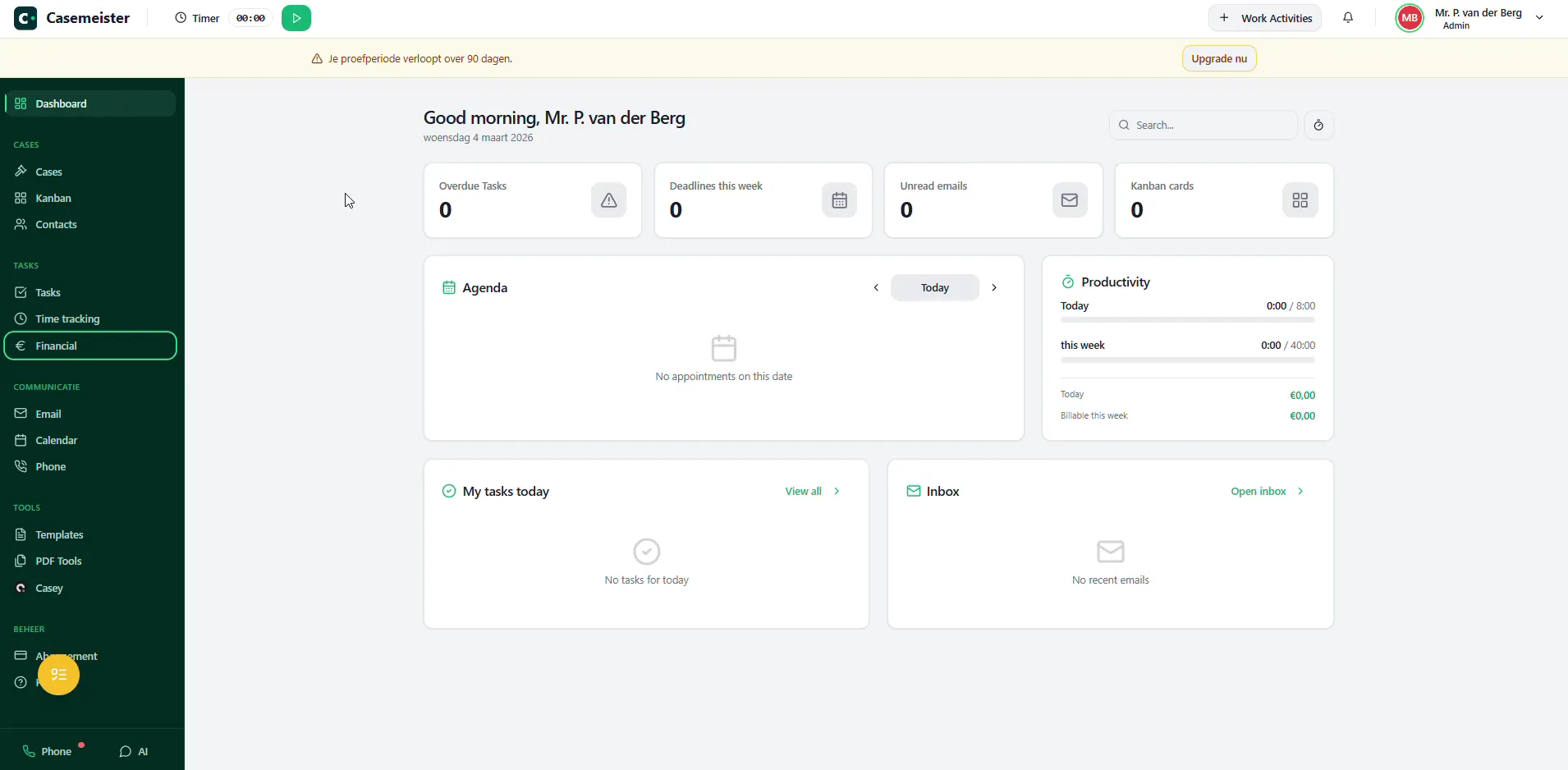
A telling example is time tracking. For FlexUren we built a system in which logged hours are no longer copied into the administration by hand, but flow through under control. That not only saves time, it also removes the argument about wrongly retyped figures. For CaseMeister AI components take over reading and sorting case documents, work that would otherwise cost hours per case.
What does process automation deliver in concrete terms? Usually a combination of recovered hours and fewer mistakes. A team that retypes for two hours a day wins back well over a workday per week per person. Those hours go to work that does require a human.
We build the connections themselves via our API development service. A reliable integration stands or falls with error handling: what happens if the other system goes down for a moment? That is why we always build in retries, logging and alerts, so a hiccup does not become a silent data error.
Not every automation needs AI. A fixed rule ("invoice over €5,000 goes to the director") is just logic, you do not need a language model for that. AI only comes in handy when the input is messy and unpredictable: an invoice in fifty different layouts, an email whose intent has to be inferred, a form that is half filled in.
For that kind of work we use document extraction and language models, but always with a control layer. An AI that reads out an amount may not blindly put it into the bookkeeping. That is why we build in thresholds:
Is AI in an automation reliable enough for the bookkeeping? With the right control layer, yes. We never let AI loose on critical data unchecked: when in doubt a human steps in, and every step is logged so you can see afterwards exactly what happened.
We build the AI components via our AI development service, on the same production stack as the rest. For anyone who wants to know what obligations apply around automated processing of personal data, the Dutch government sets out the main lines. We set up the software so that compliance is built in.
Our own base for multi-tenant SaaS: a Laravel + Filament starter, audit trail and tenant management. We build client platforms on it.
Used internally EDITORIAL · LONG-FORM ↗What we write down as we learn it. Case studies, technical write-ups, design decisions. No content marketing, just real knowledge.
42 articles RESEARCH · AI EXPERIMENTS ↗Side projects and R&D. Voice-agent prototypes, RAG pipelines, AI knowledge-graph experiments. Some become products. The rest teach us something.
455 examples in the LabA first working automation is usually in production within 6 to 10 weeks. The turnaround depends mainly on the systems that need to be connected. A modern SaaS with a clean API is quick to integrate, an outdated internal system without documentation takes more investigation. We work in weekly sprints and prefer to deliver the step that saves the most time first, so the project pays for itself quickly. After that we expand in phases. A common mistake is wanting to automate everything at once. We start small, prove it works, and build out from there. That way you keep control and see the return before the whole project is finished.
In most cases, yes. If your system has an API, the connection is often straightforward. If it does not, we look for another way: a database connection, an import and export file, or as a last resort a controlled screen automation. What we do not do is build fragile solutions that break at the first update. We first investigate how stable a connection can be before we recommend it. With truly outdated systems we sometimes honestly advise that a connection costs more maintenance than it delivers, and we look at alternatives. Our experience with integrations between old systems and modern SaaS sits in projects like FlexUren and IndexNu, where data has to flow reliably between different worlds.
We design for that in advance. No system is flawless, so the question is not whether something ever goes wrong, but what happens then. On critical steps we build in logging and error handling: if something goes wrong, it is recorded and the person responsible gets a notification, instead of a wrong number quietly going through. With AI components we work with confidence thresholds: if the system is in doubt, the document goes to a human instead of to the bookkeeping. And because every step is traceable, you can see afterwards exactly where it went wrong and fix it. That transparency is precisely why you would rather not rely on an opaque off-the-shelf tool you cannot look inside.
Both, in that order. Up front you invest in a first automation, at a price we fix after a short intake. The saving comes afterwards and is easy to calculate. If someone spends two hours a day retyping against an hourly rate, you are quickly talking about thousands of euros a year per employee, plus the cost of mistakes you prevent. We deliberately start with the step that costs the most time, so the payback period is short. There is also a less visible benefit: work that is boring and error-prone makes people unhappy. Removing that raises not only output but also job satisfaction. We make an estimate together up front of the hours to be won, so you can weigh the investment against a concrete number.