INDUSTRY · HOSPITALITY
Software for hospitality.
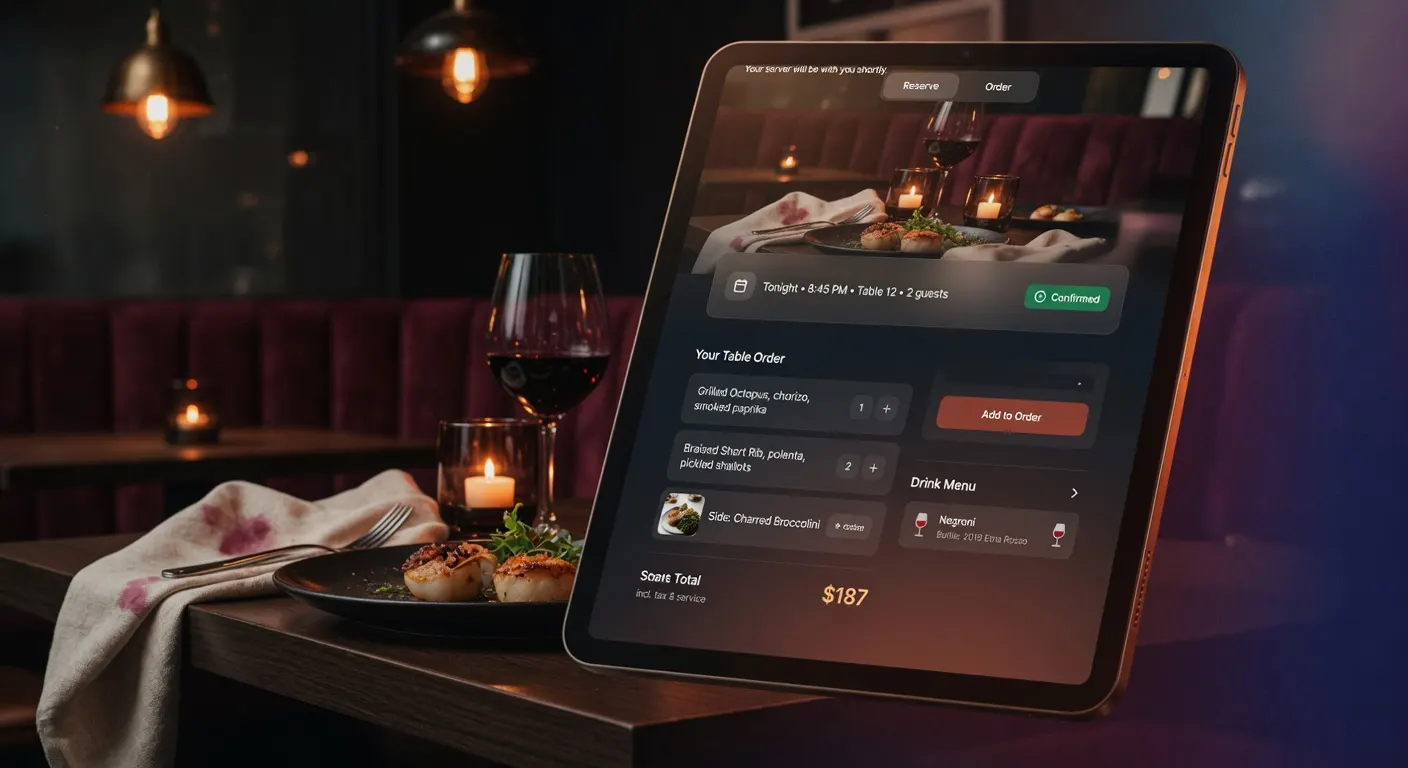
Reservation systems, online ordering, inventory management and local SEO for restaurants, bars and beauty.
Reservation systems, online ordering, inventory management and local SEO for restaurants, bars and beauty.
Hospitality tools have to work on mobile, for customers and staff alike. We build booking flows that work just as smoothly on iOS and Android as on desktop.
Hospitality software is custom software that lets restaurants, salons and other service businesses handle reservations, orders and customer contact, often tied to a findable website that brings in new customers. The difference with general software is in the rhythm: hospitality has peaks, no-shows and a guest who wants to book a table within ten seconds.
In practice it comes down to two sides: bringing the customer in and handling their visit smoothly. A nice reservation system without visitors is empty, and good visibility without a working booking system lets customers drop off again. Examples from our work:
The hallmark of good hospitality software is that it does not let you down at the busiest moment. During a peak a reservation has to be done in seconds, without a hitch and without a double booking.
A reservation system is worthless if nobody finds you. For hospitality and local services, software therefore starts with visibility: in Google, on the map, and increasingly in the answers of AI assistants that people ask where they can best eat or make an appointment.
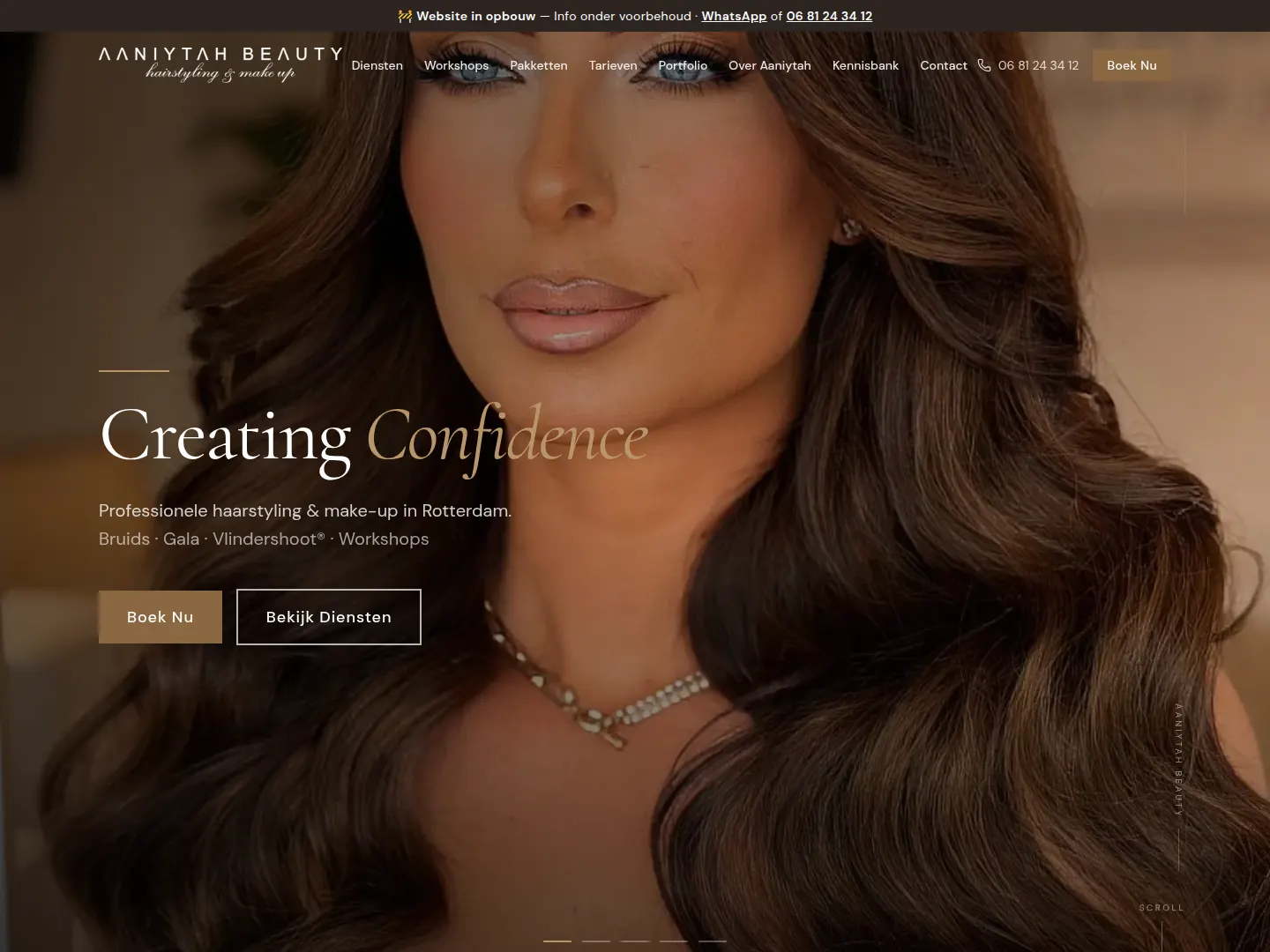
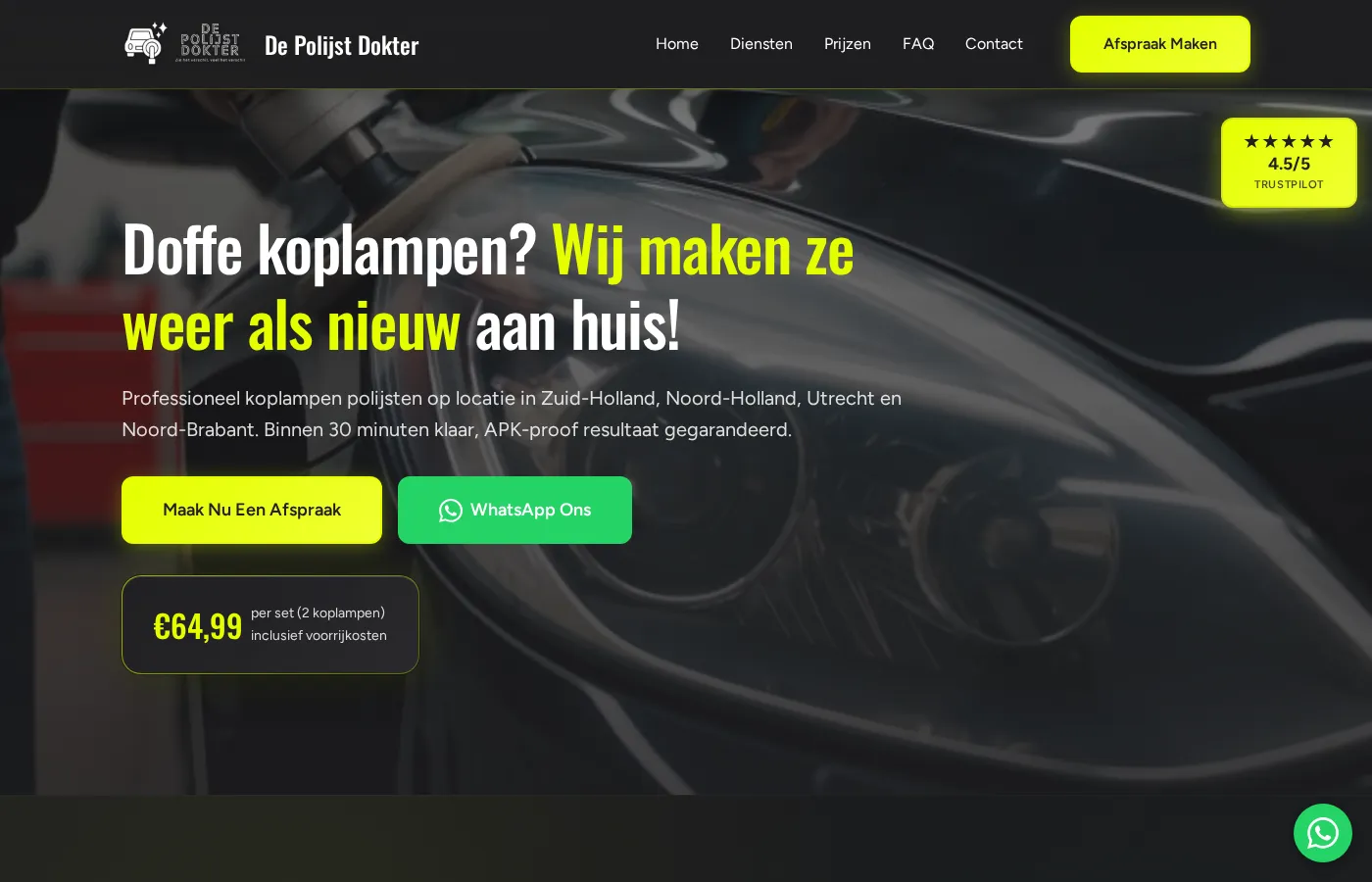
For Aaniytah, a premium beauty studio, we built an extensive, highly findable site with a booking system underneath. For De Polijst Dokter we worked on the online visibility that draws new customers to the service. Our SEO and AEO makes sure you appear not only in Google but also in AI answers, and with Google Ads we bring in bookings on target for those who want to grow faster.
What is AEO and why does it count for hospitality? AEO stands for answer engine optimization: making sure AI assistants such as ChatGPT and Google AI Overviews name your business when someone asks where to eat or which salon is good. More and more people ask it that way, and whoever is not named there misses that customer.
What we build in by default for visibility in hospitality:
Once the customer is in, booking or ordering has to run flawlessly, especially at the busiest moment. A reservation system that stutters during the evening peak costs you not only that booking but also the guest's trust. So we build for the rush: fast response times, no double bookings, and a system that stays up when everyone wants a table at once.
We build the reservations and ordering on a SaaS architecture that grows with your busy periods, and where needed we connect payment, confirmation emails and reminders to cut down no-shows. For a chain or several locations we keep the data separate per location, while one update reaches all locations at once.
The order in which we tackle a hospitality project:
Good hospitality software is not a standalone system but a chain: getting found, booking smoothly, and coming back without hassle. We build that chain in one line so each part reinforces the next.
Our own base for multi-tenant SaaS: a Laravel + Filament starter, audit trail and tenant management. We build client platforms on it.
Used internally EDITORIAL · LONG-FORM ↗What we write down as we learn it. Case studies, technical write-ups, design decisions. No content marketing, just real knowledge.
42 articles RESEARCH · AI EXPERIMENTS ↗Side projects and R&D. Voice-agent prototypes, RAG pipelines, AI knowledge-graph experiments. Some become products. The rest teach us something.
455 examples in the LabYes, because that is exactly what we build for. Hospitality has predictable peaks: the evening service, a holiday, the hours after an ad. A system that then stutters or allows double bookings costs you money and trust. We set the reservations and ordering on a SaaS architecture that scales with the rush, with fast response times and a tight check that prevents two guests from getting the same table or the same time slot. Before it really gets busy, we test the system under peak load, so you do not run into a fault on the busiest evening. With several locations we keep the data separate per location, while one update reaches all locations at once, so you do not have to update each business separately.
SEO, search engine optimization, makes sure you rank high in the classic search results of Google when someone searches for, say, a restaurant or salon in your area. AEO, answer engine optimization, goes a step further and makes sure AI assistants such as ChatGPT and Google AI Overviews name your business when someone asks where to eat or which salon is good. More and more people put that question directly to an AI instead of scanning a list of links. Whoever is not named there misses that customer without noticing. We build your site so it is findable both ways: structured data and clear answers for the AI, and strong local signals for the classic search results. For those who want to grow faster, we add targeted Google Ads.
A reservation system with a findable website starts after a short intake which is lower than our platform projects because the foundation is more compact. The price depends on what gets added: reservations alone are cheaper than a full environment with online ordering, payment, a webshop and ongoing ad campaigns. We split it into components that deliver value on their own, so you can start with getting found and booking, and expand later. Beyond the build there are ongoing costs for hosting, maintenance and possibly the ad budget and the management of the Google Ads campaigns. We make those monthly costs clear up front. We would rather give an honest range after a short conversation about your business than a number that looks too good.