INDUSTRY · REAL ESTATE
Software for real estate.
Broker tools, tenant portals, BAG/Kadaster integrations and local SEO for real estate professionals.
Book an intro →
Broker tools, tenant portals, BAG/Kadaster integrations and local SEO for real estate professionals.
Book an intro →Real estate tools have to process realtime data from BAG, Kadaster and PDOK. We have already built those integrations for HuurrechtHulp and FlexBedden.
Real estate software is custom software that lets landlords, managers and brokers manage their properties, tenants and contracts, often with a calculation engine tied to the law. The difference with general business software is in the domain knowledge: rents, point counts and deadlines are set in law and change regularly.
In practice it comes down to two things at once: the management of properties and tenants, and the calculations that go with it. A mistake in a rent calculation costs money and can come back legally, so the calculation side has to be right down to the point. Examples from our work:
The hallmark of good real estate software is that the calculations are reproducible: the same property with the same characteristics always gives the same, checkable result, even after the law has changed.
Dutch rental legislation is not a standing target. With the Affordable Rent Act and the annual adjustments to the housing valuation system, the rules shift regularly. Software that calculates on this has to be right not just today but also updatable without rewriting the whole application. So we build the calculation rules as a separate, tested layer.
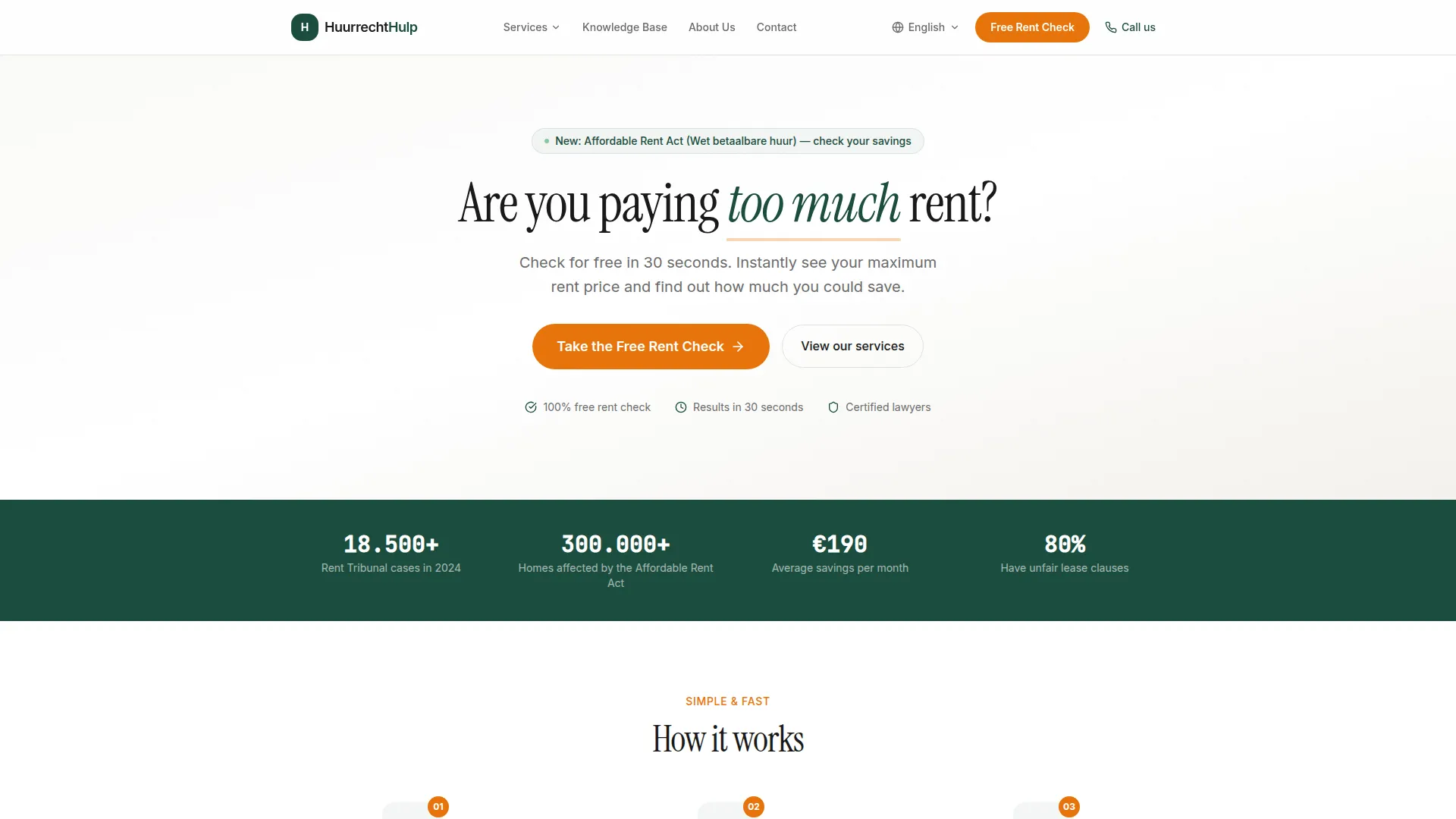
For HuurrechtHulp we built tooling that helps tenants understand their rights, with the right calculation underneath. We work out a WWS point count based on verified, current data, without assumptions, because a wrong outcome has immediate financial consequences. The Dutch government publishes the current rules on rents and the point system, see rijksoverheid.nl. We take those rules as the source, not our memory.
What happens when the rent law changes? Because the calculation rules sit in a separate layer with their own tests, we adjust that layer without touching the rest of the system. Your tool then keeps calculating with the new norms, and the old calculations stay traceable as they were.
What we build in by default for a calculation tool in real estate:
Beyond the calculation side there is the daily management: which property is occupied, which tenant filed a report, which payment is outstanding. We build this as a central system that connects with the tools you already use, so you do not have to enter the same data three times.
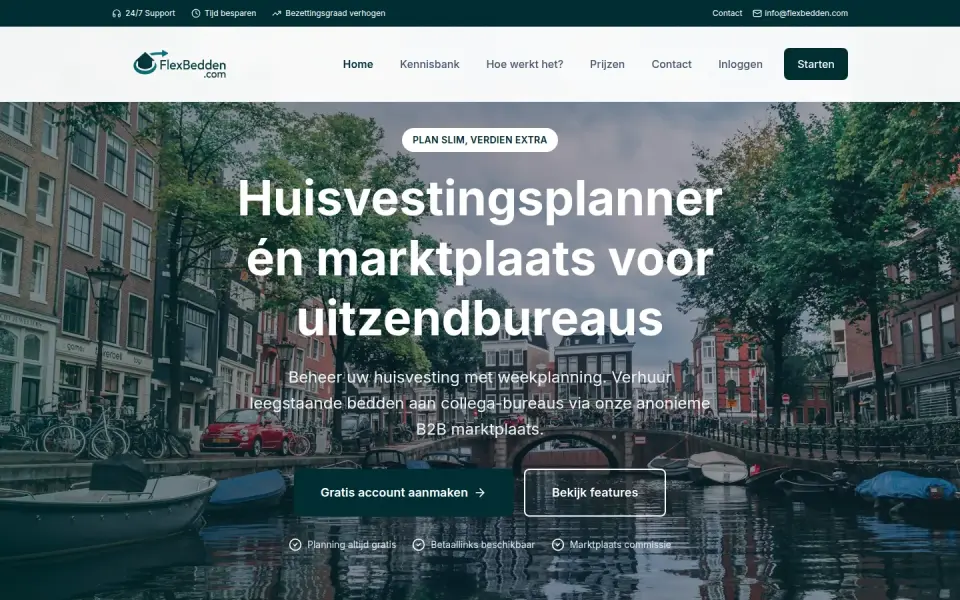
For FlexBedden we worked on a platform for the rental and occupancy of units, where insight into availability is the heart of the system. We connect through our API development to accounting, payments and external property sources, and set it up as built for multiple clients SaaS so a manager with several portfolios keeps them separate.
The order in which we tackle a real estate project:
A good real estate platform is not a static database. It grows with your portfolio and stays correct when the rules change, without starting over each time.
Our own base for multi-tenant SaaS: a Laravel + Filament starter, audit trail and tenant management. We build client platforms on it.
Used internally EDITORIAL · LONG-FORM ↗What we write down as we learn it. Case studies, technical write-ups, design decisions. No content marketing, just real knowledge.
42 articles RESEARCH · AI EXPERIMENTS ↗Side projects and R&D. Voice-agent prototypes, RAG pipelines, AI knowledge-graph experiments. Some become products. The rest teach us something.
455 examples in the LabYes. We work out a housing valuation system based on verified, current data and make no assumptions, because a wrong outcome has immediate financial and legal consequences. We build the calculation rules as a separate, tested layer that can be updated apart from the interface. When the law changes, for example through an adjustment to the point system or the Affordable Rent Act, we adjust that layer without touching the rest of the application. The Dutch government publishes the current rules on rents and point counts, and we take those as the source. Outcomes are reproducible and traceable: the same property with the same characteristics always gives the same result, and you can read back how that result was built up.
Yes. We build API connections to the systems you already use, such as accounting packages, payment providers and external property sources, so you do not have to enter data twice. A rent payment that comes in can be matched automatically with the right tenant and property. We set the management up as built for multiple clients SaaS, so a manager with several portfolios or several clients keeps the data separate. We build the connections to be robust, with logging and a fallback for when an external system is temporarily unreachable, so an outage on the other side does not take your management down. Which connections make sense we decide together, based on how your management process actually runs now.
A scoped platform starts after a short intake The price depends on the components: a standalone calculation tool such as a WWS checker is cheaper than a full management system with a tenant portal, occupancy overview and connections to accounting and payments. We split the project into components that deliver value on their own, so you do not pay for the whole system at once before anything works. Beyond the build there are ongoing costs for hosting and maintenance, plus periodic maintenance when rental legislation changes and the calculation layer needs updating. We make those monthly costs clear up front. We would rather give an honest range after a short conversation about your portfolio than a number that looks too good.