INDUSTRY · LEGAL TECH
Software for legal teams.
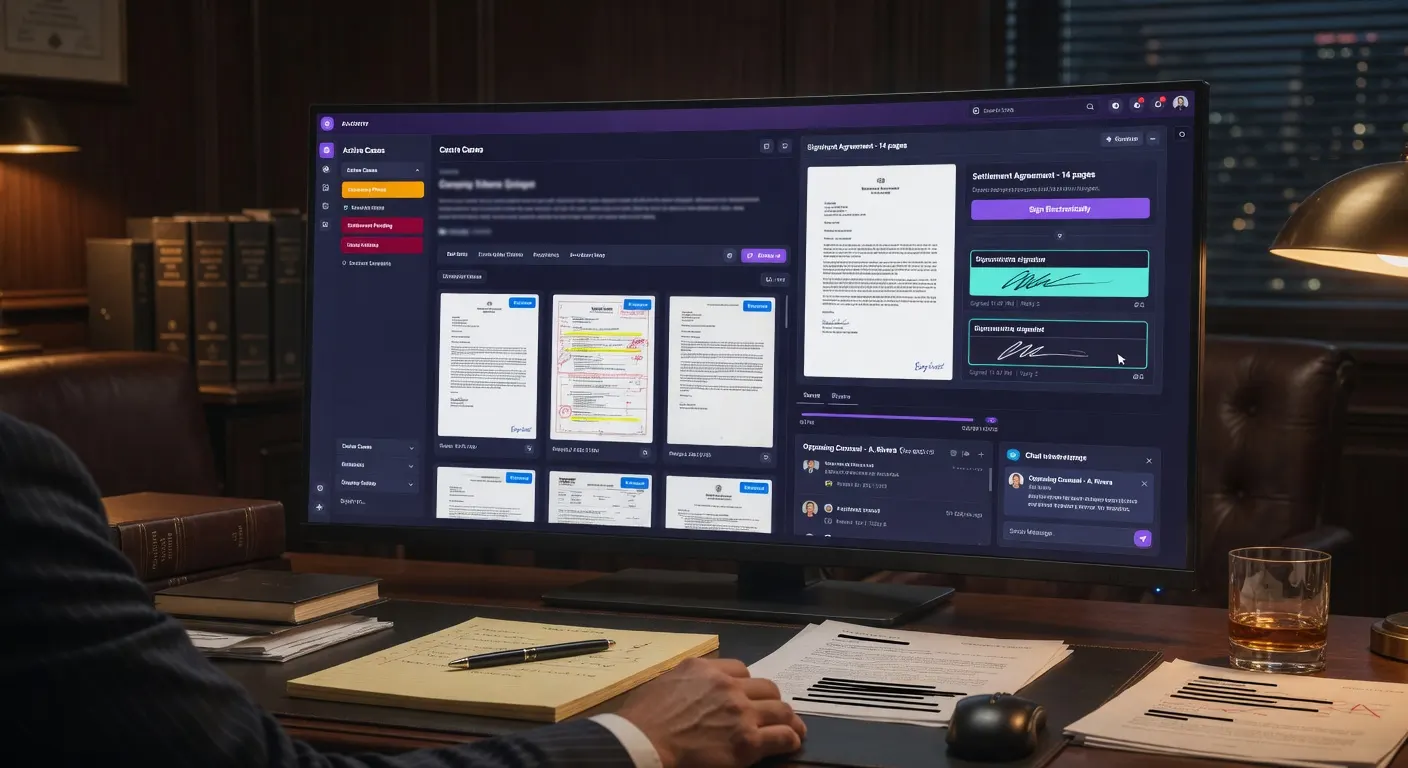
Case management, document AI, lead-gen and signing flows for law firms, counter-experts and mediation practices.
Case management, document AI, lead-gen and signing flows for law firms, counter-experts and mediation practices.
We understand compliance requirements and GDPR conformity in legal workflows. Our SaaS platforms are built with audit trail, permissions per employee and data isolation as a hard requirement, not an option.
Legal software is custom software that lets a firm manage its cases, communication, signing and invoicing in one place. Unlike a general CRM, legal software accounts for the things that are fixed in this profession: professional confidentiality, set retention periods, signing that holds up as evidence and a strict separation between cases.
In practice it is rarely about one standalone tool. It is about the chain: a matter comes in, gets a case file, runs through fixed steps, leads to documents that get signed, and ends in an invoice with an itemized time entry. Examples from our work:
The hallmark of good legal software is traceability. You see who did what and when, a deed can be proven after the fact, and sensitive data stays inside the case file where it belongs.
Most firms work with a collection of separate tools: a mailbox, a folder structure, a standalone signing package and an accounting program. Time is lost there and mistakes are made there. We build software that lines up the entire matter from intake to invoice, so nobody has to retype anything or hunt for where a document lives.
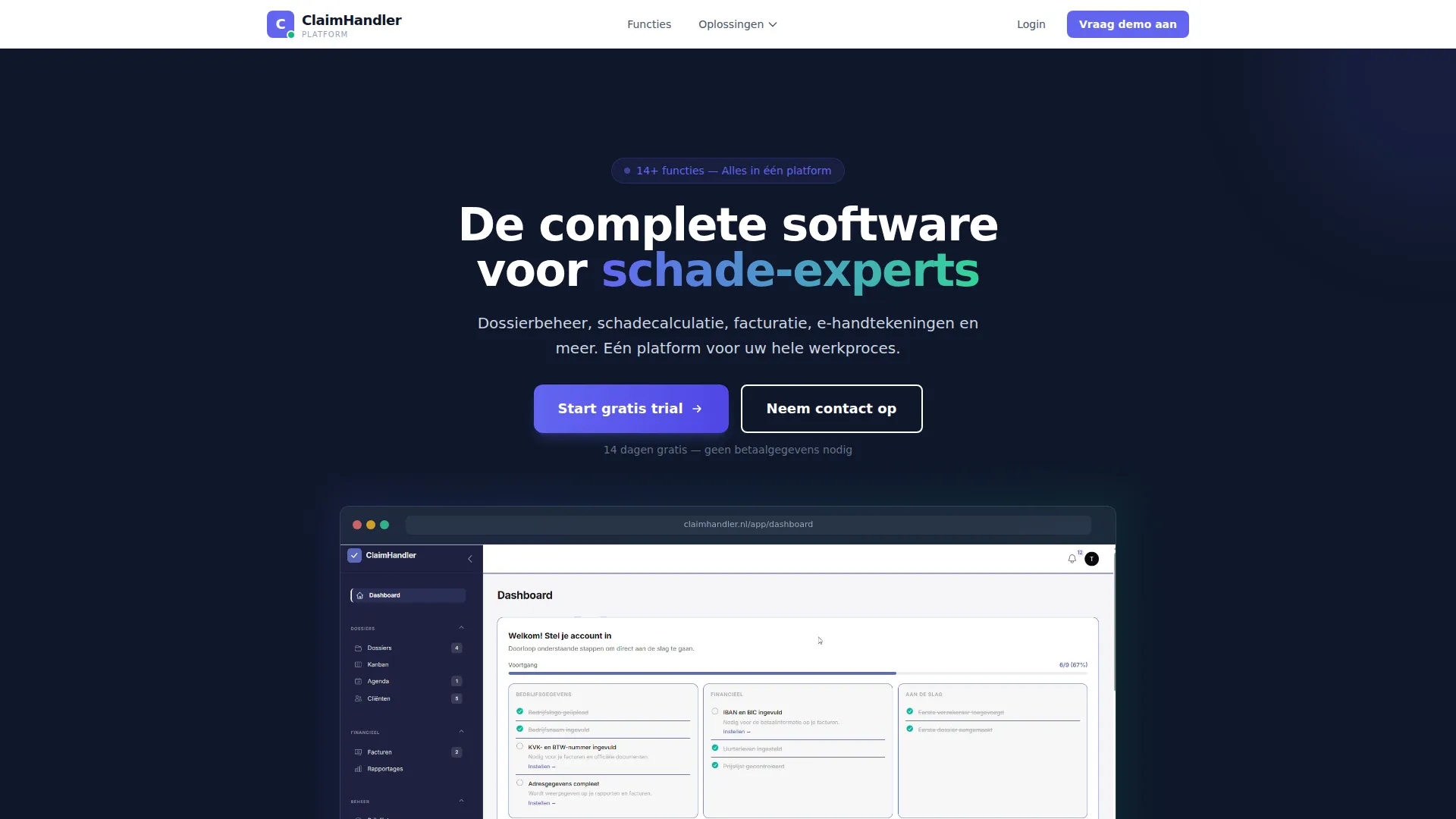
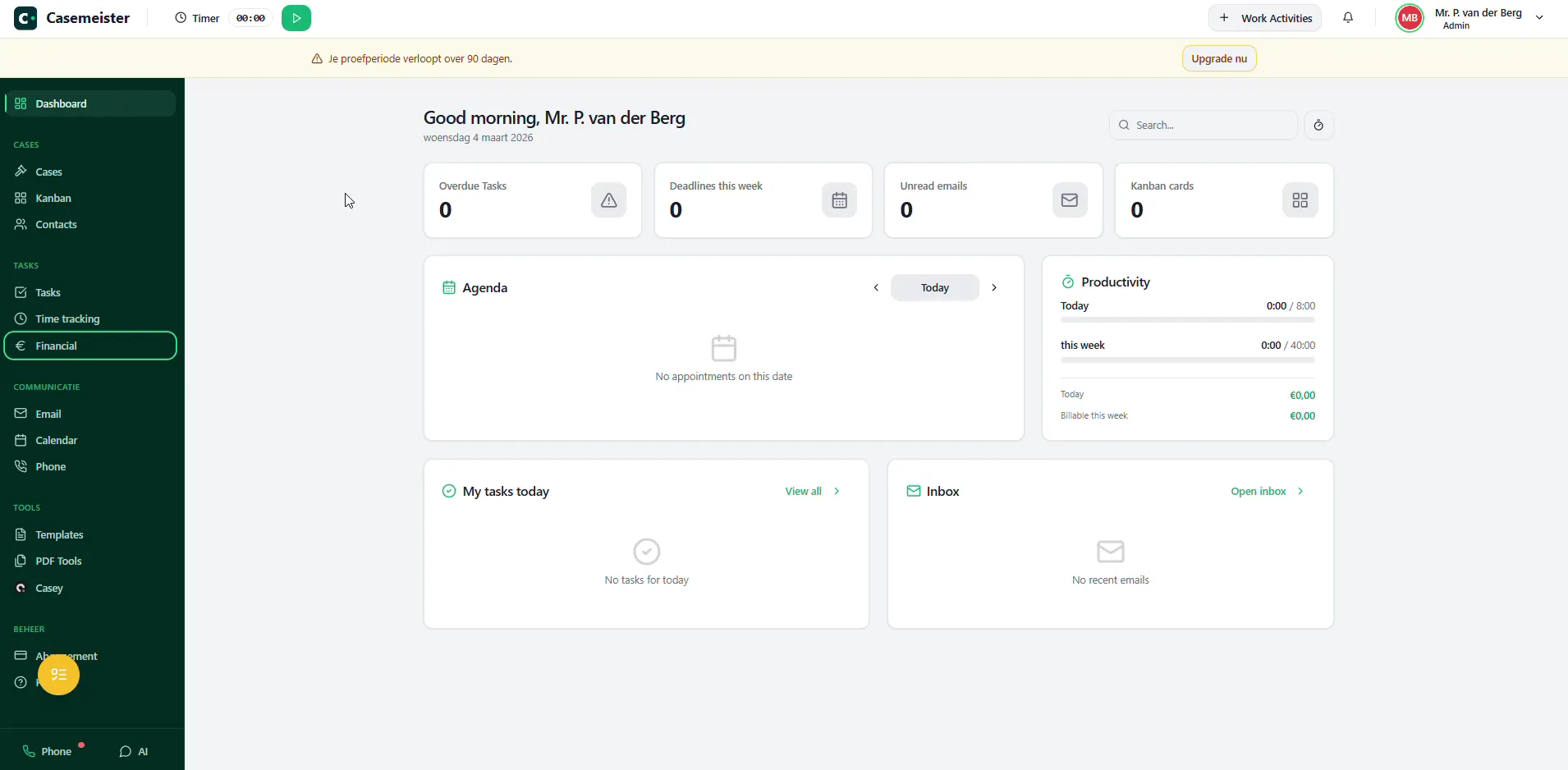
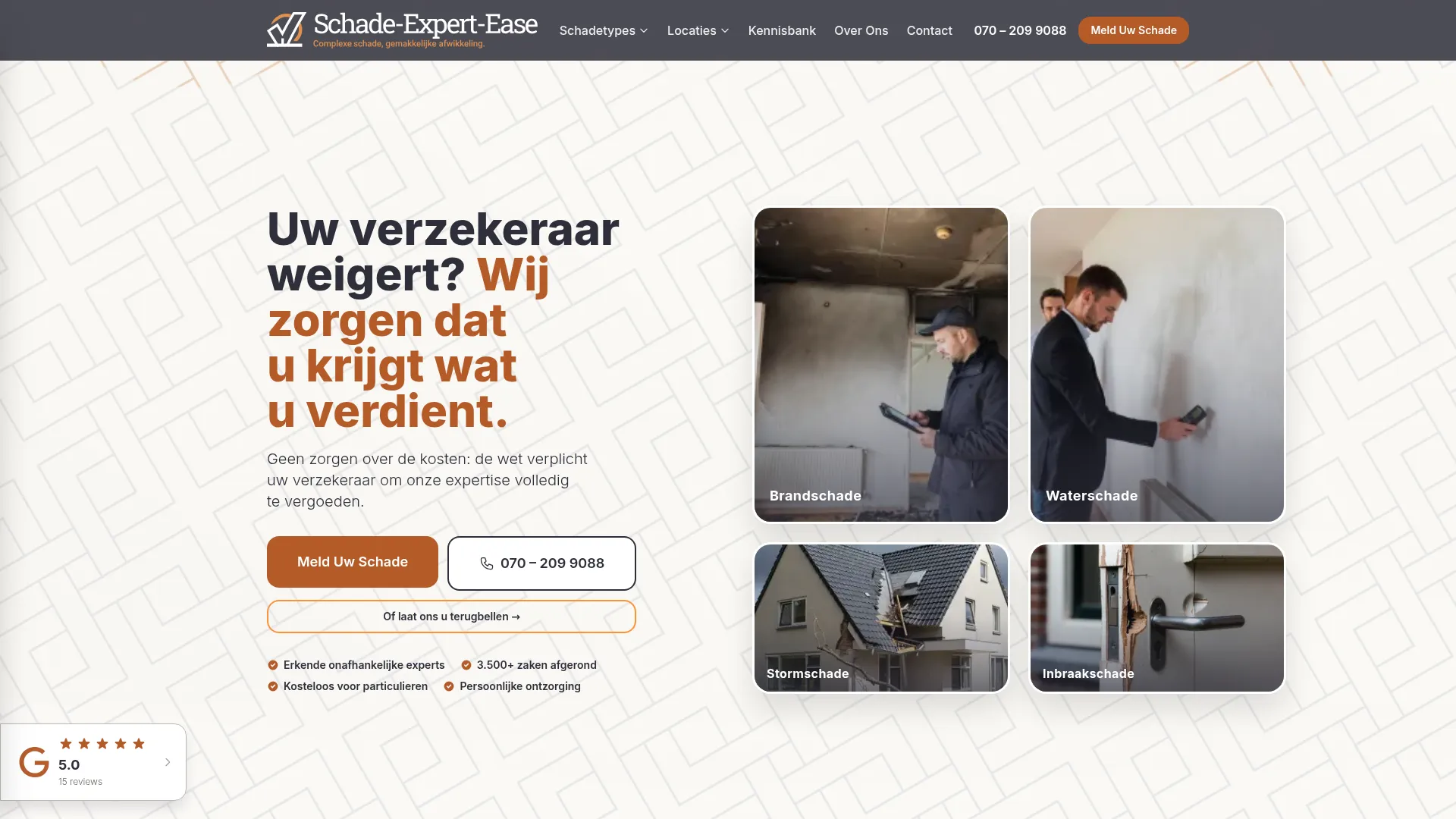
For ClaimHandler we built a built for multiple clients platform for damage experts and personal injury firms, with case files, deed signing, time tracking and invoicing in one environment. The owner signs all deeds centrally, while staff only handle their assigned cases. For CaseMeister and ClaimBazen we worked from the same foundation: a fixed workflow that fits how a legal firm actually works, not how a generic tool thinks it works.
Do I have to change my way of working to fit the software? No. We map your workflow first and build around it. A deed you sign centrally stays central, a case that passes through four hands keeps its fixed steps. The software follows the firm, not the other way around.
The order in which we tackle a legal project:
A legal firm processes special categories of personal data: medical reports in injury cases, financial details, sometimes criminal records. That brings obligations under the GDPR and professional confidentiality. We build those obligations into the software instead of bolting them on afterwards as policy.
In concrete terms that means: data separated per firm in a built for multiple clients setup, roles and permissions so a staff member only sees their own cases, and logging on critical actions such as opening a case, signing a deed or sending an invoice. Under Dutch data protection rules you have to be able to show who had access to which data, see autoriteitpersoonsgegevens.nl. That accountability is built into the system by default with us.
What we build in by default for legal software:
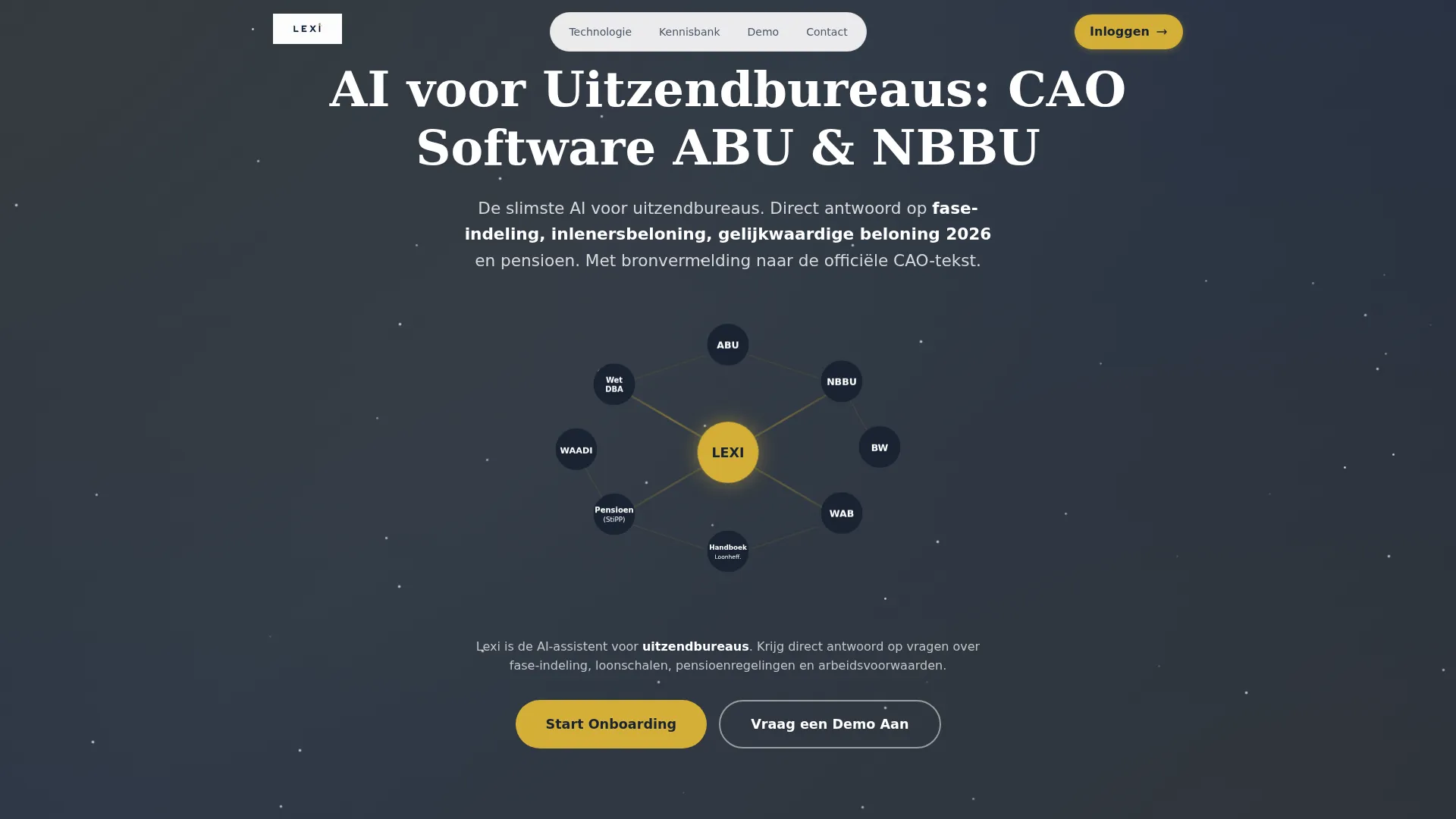
On the AI side we choose models that run inside the EU where needed, so sensitive documents do not leave the jurisdiction. Our AI development and SaaS architecture connect to that directly. For Lexi AI this meant an assistant for collective agreements that only answers based on recorded sources, with a reference to the article the answer rests on.
Our own base for multi-tenant SaaS: a Laravel + Filament starter, audit trail and tenant management. We build client platforms on it.
Used internally EDITORIAL · LONG-FORM ↗What we write down as we learn it. Case studies, technical write-ups, design decisions. No content marketing, just real knowledge.
42 articles RESEARCH · AI EXPERIMENTS ↗Side projects and R&D. Voice-agent prototypes, RAG pipelines, AI knowledge-graph experiments. Some become products. The rest teach us something.
455 examples in the LabYes, and we build that in rather than bolting it on as policy. A legal firm processes special categories of personal data such as medical and financial documents, and the GDPR requires you to be able to show who had access to it. We handle that with data separated per firm in a built for multiple clients setup, with roles and permissions so staff only see their own cases, and with logging on every critical action: access, signing, invoicing and export. Retention periods and deletion policies are aligned with the law. For AI components we choose models that run inside the EU where needed. The Dutch data protection authority publishes practical guidance on this that we take as the starting point when designing the system.
Yes. We connect Docusign for signing with evidential value, so a deed can be shown after the fact to have been signed by the right party. In ClaimHandler we built a central signing hub where the owner signs all deeds centrally and staff only handle their assigned cases. The software stamps signature fields in the right place in the document, fills in expert details automatically and keeps the signed document in the case file. We deliberately separate different signing flows when they differ legally, for example an assignment deed versus an ordinary signing document, so each type of document keeps its own requirements and there is no confusion about what was signed.
A scoped platform starts after a short intake The price depends on the modules: case management alone is cheaper than a full chain with deed signing, time tracking, invoicing and an AI assistant. We split the project into components that deliver value on their own, so you do not have to pay for the whole system at once before anything works. Beyond the build there are ongoing costs for hosting, maintenance and possibly the use of AI models. We make those monthly costs clear up front. We would rather give an honest range after a short conversation about your case flow than a number that looks too good and later turns out to be wrong.
A first working module is usually live within 8 to 12 weeks, most often case management itself. We work in short sprints with weekly demos, so you see the system grow and can steer before it is finished. Signing, invoicing and AI we connect afterwards step by step, so the firm never switches over all at once and ongoing cases simply continue. In the first weeks after go-live we watch along on real case files, because that is the moment you find out whether the workflow holds up in practice too. A firm-wide platform naturally takes more time, but every module that is finished delivers immediate time savings.