SOLUTION · AI
AI in production.
Computer vision, RAG, voice agents and LLM integrations. Not a demo, but production-grade systems that run for months.
Computer vision, RAG, voice agents and LLM integrations. Not a demo, but production-grade systems that run for months.
NedDev builds AI systems that actually run in production: RAG knowledge bases, computer vision, voice agents and LLM integrations on a Laravel or FastAPI backend. A scoped AI project starts after a short intake and a first working version is typically live within 6 to 10 weeks. We do not deliver a demo that never leaves the laptop, but systems that run flawlessly for months, with logging, fallbacks and cost control built in. NedDev is a Rotterdam studio, KvK 65641922.
AI solutions are software systems that handle tasks that used to need a human: understanding text, reading documents, recognizing images or holding a conversation. The difference with a toy is that a real AI solution becomes part of a work process and runs on it day in, day out.
In practice it is rarely about a single model. It is about the chain around it: the data that goes in, the checks on what comes out, and the connection to the systems you already use. Concrete examples from our work:
The mark of a good AI solution is predictability. You know what it costs per month, you can see what the system does, and you can trace back why it gave a particular answer.
Most AI projects do not fail on the model, but on everything around it. A demo works in a controlled setting. Production means dealing with messy input, heavy load, costs that can spiral, and users who use the system in ways no one expected.
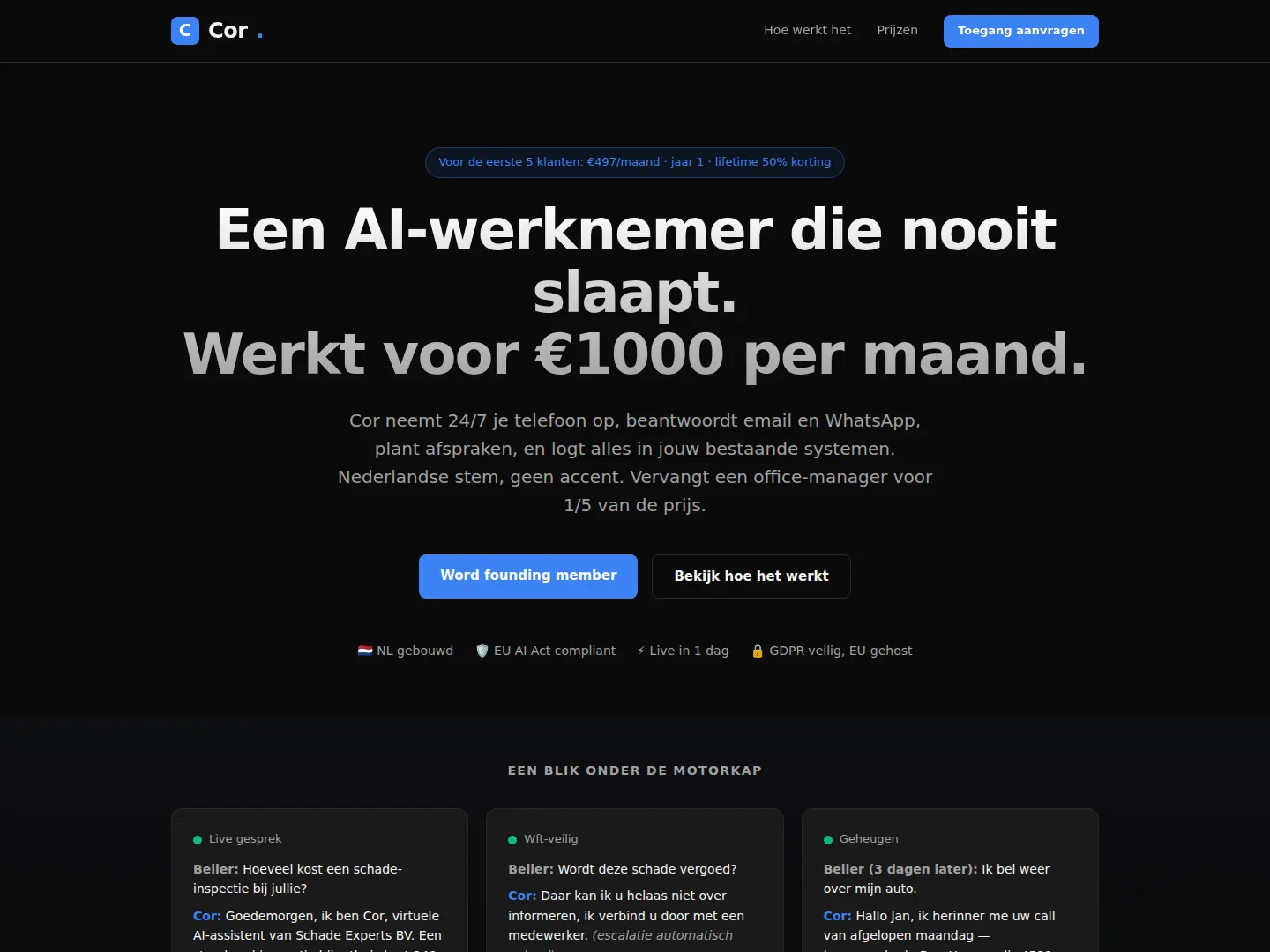
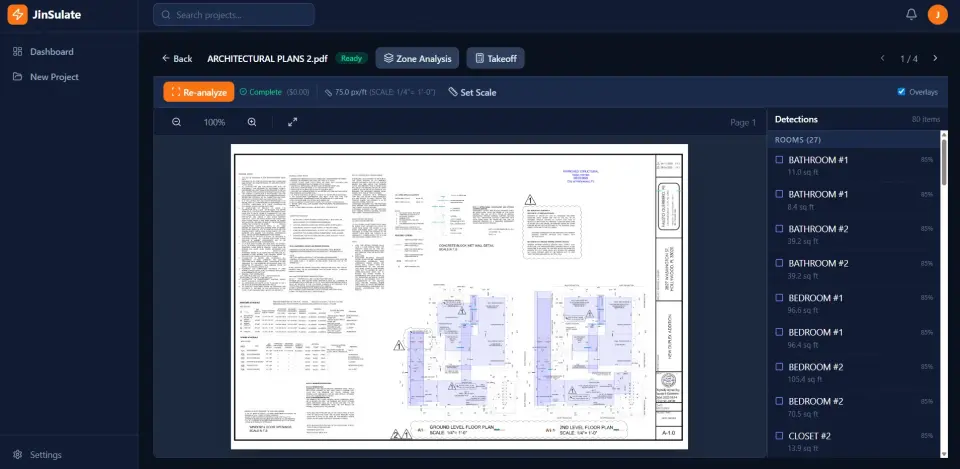
So we build with production in mind from the first week. That means logging on every AI call, hard limits on costs, and a fallback for when the model is unsure. For our AI colleague Cor we built a platform with RAG memory that stays separated per customer. For JinSulate a geometric counter replaced the loose AI estimates, so the same drawing always gives the same result.
Does AI work even if I have no technical team? Yes. We deliver the system including management, monitoring and a dashboard where you can see for yourself what is happening. You do not need a prompt engineer on staff to get value out of it.
The order in which we tackle an AI project:
Our AI runs on the same stack as the rest of our work, so it stays manageable. The backend is usually Laravel or FastAPI, with a separate layer for the AI calls. For platforms that serve multiple customers we connect this to our built for multiple clients SaaS architecture, so customer data never gets mixed up.
We are model-agnostic. For each task we pick the model with the best balance between quality and cost, and we build so you can switch later without rewriting the whole application. For sensitive data we recommend models that run inside the EU where needed. The Dutch government publishes practical guidelines on responsible AI use, see rijksoverheid.nl.
What we build into an AI solution as standard:
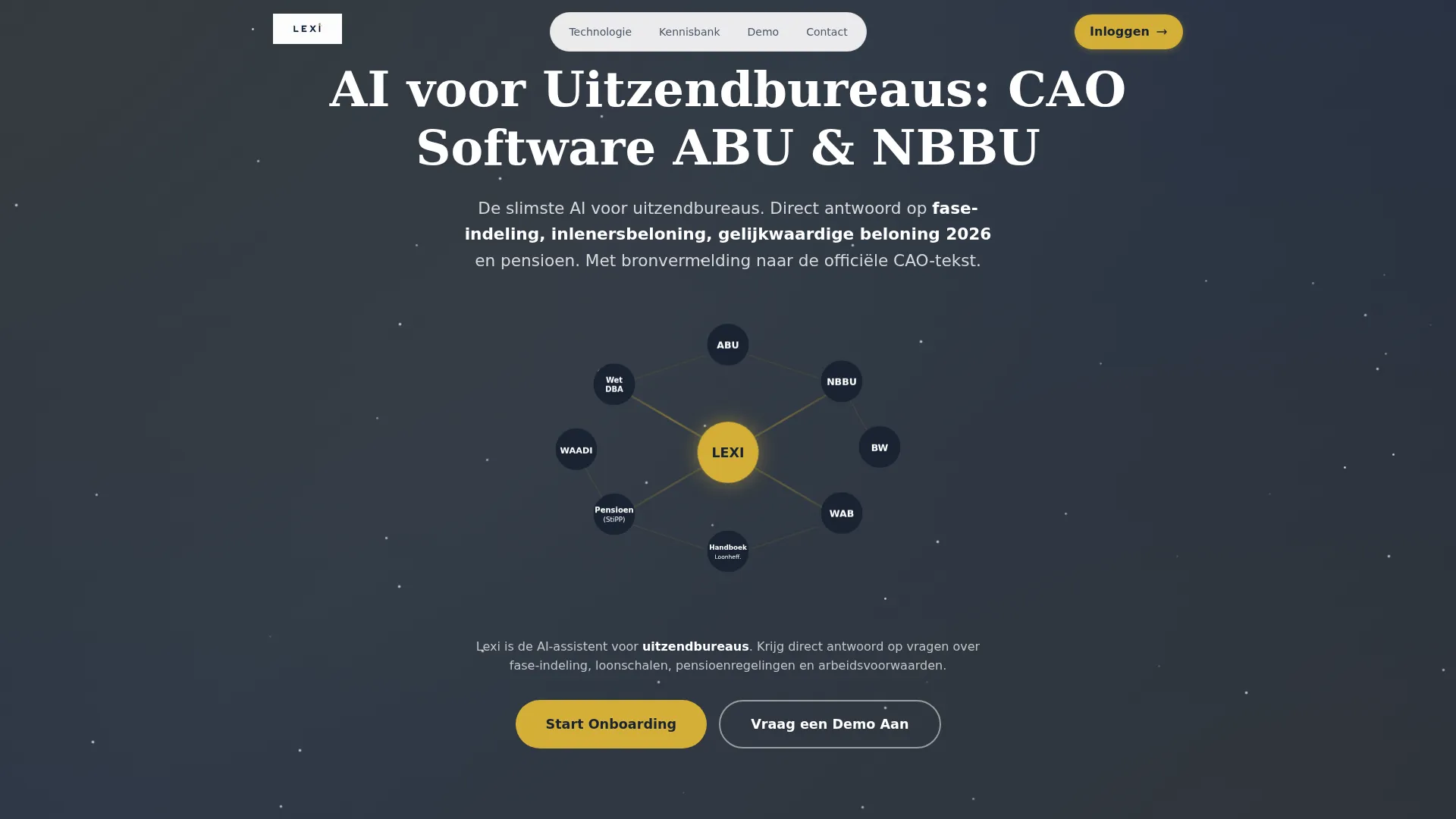
For Lexi AI this meant an assistant that answers collective labour agreement questions based on recorded sources, citing the article the answer rests on.
Our own base for multi-tenant SaaS: a Laravel + Filament starter, audit trail and tenant management. We build client platforms on it.
Used internally EDITORIAL · LONG-FORM ↗What we write down as we learn it. Case studies, technical write-ups, design decisions. No content marketing, just real knowledge.
42 articles RESEARCH · AI EXPERIMENTS ↗Side projects and R&D. Voice-agent prototypes, RAG pipelines, AI knowledge-graph experiments. Some become products. The rest teach us something.
455 examples in the LabA scoped AI project starts after a short intake The price depends on complexity: a RAG knowledge base on your own documents is cheaper than a voice agent with telephony integration or computer vision on drawings. On top of the build there are ongoing costs: the usage of the AI models themselves, plus hosting and management. We make those monthly costs clear up front and keep them in check with hard limits, so a spike in usage never turns into a surprise on the bill. We would rather give an honest range after a short conversation than a number that looks too good up front.
A first working version on real data is typically live within 6 to 10 weeks. We work in short sprints with weekly demo moments, so you see the system grow and can steer before it is finished. In the first weeks after launch we watch real input closely, because that is when you find out whether the system holds up outside the test environment. A large, organization-wide AI platform obviously takes more time, but we cut that into parts that each deliver value on their own.
That risk exists if you deploy a model on its own without any control around it. We reduce it by working with RAG, where the model only answers based on recorded sources instead of guessing from memory. On top of that we build in a fallback for when the model is unsure, and we log every answer so you can see why something was said. For numerical tasks we replace the model's guess with a fixed calculation, as we did with JinSulate. That makes the result predictable and verifiable.