INDUSTRY · FINTECH
Software for finance.
Bookkeeping, invoicing, VAT returns and payment flows. Mollie and Stripe integrations with PSD2 conformity.
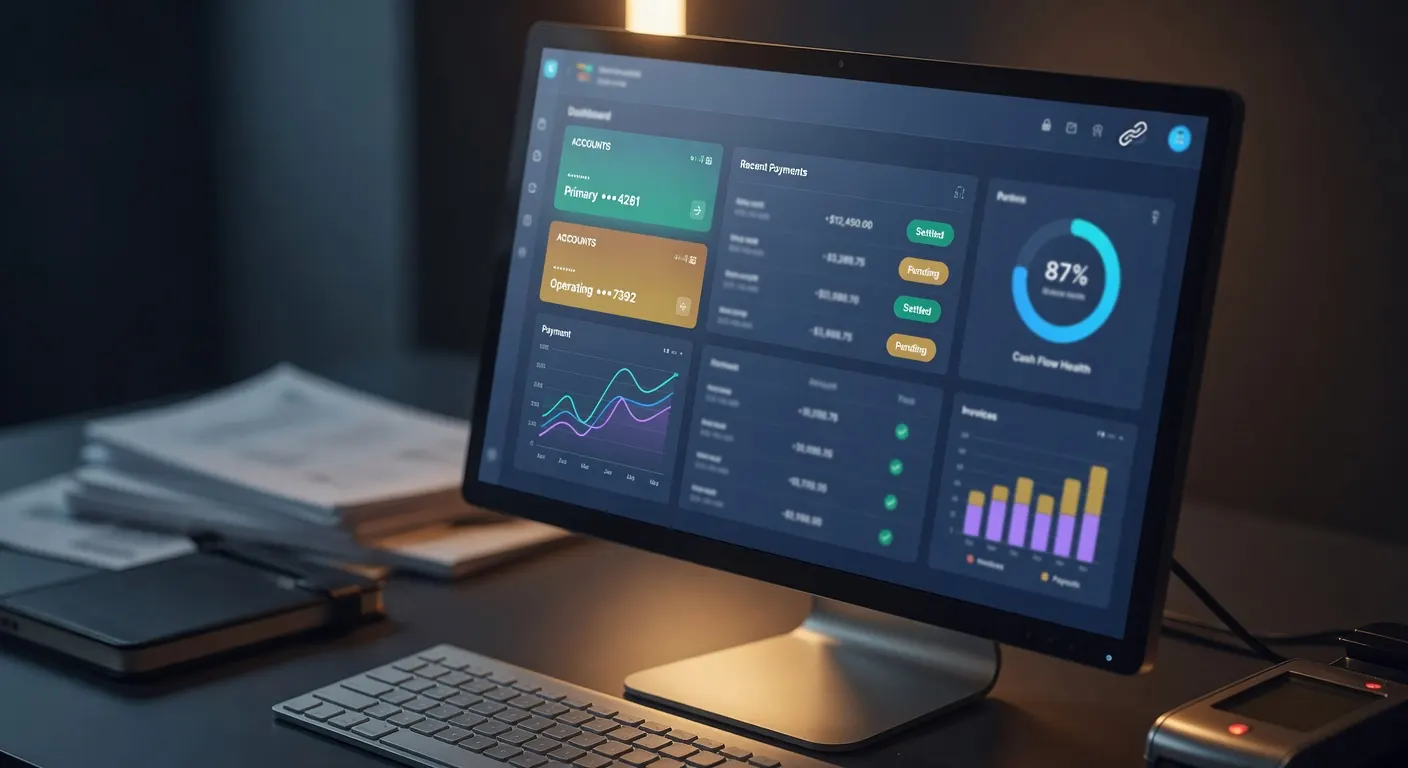
Bookkeeping, invoicing, VAT returns and payment flows. Mollie and Stripe integrations with PSD2 conformity.
Fintech calls for PSD2 compliance, SCA flows and reliable bookkeeping integrations. Our stack on Laravel + Mollie has run stably since 2022.
Finance software is custom software that lets bookkeeping firms, accountants and fintech companies manage their invoicing, transactions and bank data within the rules that apply to financial data. The difference with ordinary business software is in the requirements around payments, bank connections and the retention of financial data.
In practice it comes down to reliability and traceability. An amount booked wrong or a transaction that is not logged costs money and trust right away. Examples from our work:
The hallmark of good finance software is that every amount is traceable. You see where a transaction came from, how it was booked and who did what with it, because with money the audit trail counts.
Anyone who builds software that talks to bank accounts has to deal with PSD2, the European directive for payment services. Access to account data runs through regulated parties and strong customer authentication. We build those connections through licensed providers, so you do not have to carry the burden of the license yourself to be able to process transactions.
For IndexNu we built a built for multiple clients accounting platform that runs in production, where several sets of books stay strictly separate. The bank feed pulls in transactions and the system matches them with the right invoices. The Dutch central bank supervises payment service providers and publishes on this, see dnb.nl. We build so the connection fits those frameworks.
Do I need my own license to process bank data? In most cases no. We connect through a regulated provider that handles access to account data, so the licensing obligation sits with that party. Your software uses the data but does not pull it directly from the bank itself.
What we build in by default for finance software:
In financial administration a lot of time goes into retyping: an invoice from one system, a payment from another, a booking in a third. We build software that makes this chain balance, so a transaction is traceable from start to finish and nobody has to match by hand.
We connect through our API development to accounting packages such as Exact, so a match in the platform posts straight into the books. We set the whole system up as built for multiple clients SaaS, so an accountancy firm manages the books of all its clients in one environment without the figures getting mixed up. A connection like the one with Exact we build so the right source is used: not just sales invoices, but also the bank entry lines needed to make the match truly balance.
The order in which we tackle a finance project:
With money, half the work is proving that it adds up. That is why the audit trail with us is not an extra option but the foundation of the system.
Our own base for multi-tenant SaaS: a Laravel + Filament starter, audit trail and tenant management. We build client platforms on it.
Used internally EDITORIAL · LONG-FORM ↗What we write down as we learn it. Case studies, technical write-ups, design decisions. No content marketing, just real knowledge.
42 articles RESEARCH · AI EXPERIMENTS ↗Side projects and R&D. Voice-agent prototypes, RAG pipelines, AI knowledge-graph experiments. Some become products. The rest teach us something.
455 examples in the LabYes, and we build the bank connections so the licensing obligation does not land on you. PSD2 is the European directive for payment services and governs, among other things, how parties get access to account data, with strong customer authentication. We connect through regulated, PSD2-compliant providers that handle this access, so your software uses the transaction data without pulling it directly from the bank itself. The Dutch central bank supervises payment service providers and publishes the applicable frameworks on this, which we take as the starting point. We also log every transaction and booking with a full audit trail, so during a check or a dispute you can show where an amount came from and how it was processed.
Yes. We build API connections to accounting packages such as Exact, so a match in the platform posts straight into the books and you do not have to retype anything. In doing so we deliberately pick the right source in the package: for a balancing bank match the sales invoices alone are often not enough, and the bank entry lines are needed to truly close the match. We build the connection to be robust, with logging and a fallback for when the external package is temporarily unreachable. Worth knowing: a connection only works fully once the books on the other side are filled, for example when the bank feed in the accounting package contains data first. Which connections make sense we decide together based on your cash flow.
Financial data falls under the GDPR and also calls for an airtight audit trail, because it is about money. We handle that with separated books per client in a built for multiple clients setup, roles and permissions so a staff member only sees the books they belong to, and logging on every transaction, booking and export. Data is encrypted at rest and in transit. On top of that we build in checks and balancing totals, so a wrong booking stands out right away instead of only at year-end close. The bank connections run through regulated providers, so sensitive payment data comes in through secure, compliant channels. The goal is that every amount is traceable: you see where it came from, how it was booked and who did what with it.
A scoped platform starts after a short intake The price depends on the components: an invoicing module is cheaper than a full accounting platform with bank connections, automatic matching and posting to a package such as Exact. We split the project into components that deliver value on their own, so you do not pay for the whole system at once before anything works. Beyond the build there are ongoing costs for hosting, maintenance and the connections through regulated providers, which sometimes charge their own rate per connection. We make those monthly costs clear up front. We would rather give an honest range after a short conversation about your cash flow than a number that looks too good and later turns out to be wrong.