SOLUTION · B2B
B2B platforms built for growth.
Multi-tenant SaaS platforms that scale from the first tenant to hundreds of customers on the same codebase.
Book an intro →
Multi-tenant SaaS platforms that scale from the first tenant to hundreds of customers on the same codebase.
Book an intro →NedDev builds B2B platforms as built for multiple clients SaaS: a codebase that grows from your first customer to hundreds of companies, with separated data, roles and permissions built in as standard. The backend runs on Laravel with the admin area, the frontend on Next.js. A first working platform version is typically live within 8 to 12 weeks, after a short intake We build for growth, so your platform does not need rewriting halfway through. NedDev, Rotterdam studio, KvK 65641922.
A B2B platform is software companies use to work with each other or with their own customers: a portal, a dashboard or a workspace that sits at the center of the daily process. Unlike a consumer app, a B2B platform often runs on fixed accounts, with multiple users per company and strict rules about who can see what.
The heart of a scalable B2B platform is built for multiple clients architecture. That means each customer company, or each tenant, runs on the same codebase but has its own walled-off environment and data. A single update reaches all customers at once, without their data getting mixed up.
What sets a good B2B platform apart:
In short: a B2B platform is not a website with a login, but a workspace a company runs on.
The biggest trap with B2B software is that it gets customized per customer until you maintain ten separate versions that no one can update anymore. Multi-tenant solves that: all customers run on the same code, but see their own environment. A new feature or a security update goes out to everyone in one go.
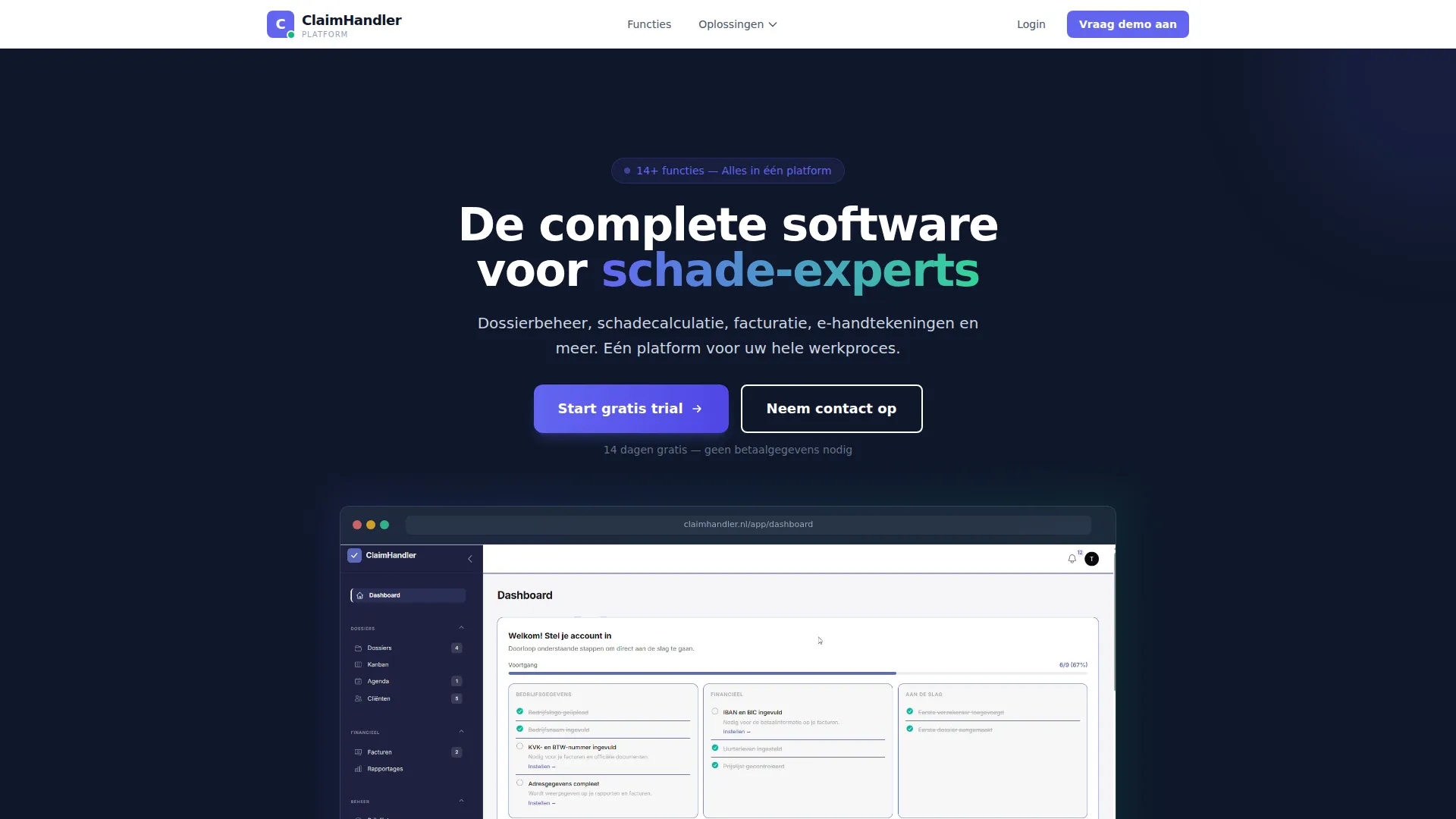
We build this with Laravel and the admin area for the backend, and Next.js for the frontend where speed and SEO count. For ClaimHandler that meant a SaaS where several loss adjusters each manage their own cases, clients and documents without seeing each other. IndexNu runs on the same principle for accounting.
Why not just a separate installation per customer? Because that seems to work in the short term and grinds to a halt in the long term. Ten separate installations means updating ten times, testing ten times and ten places where something can go wrong. One built for multiple clients platform scales to hundreds of customers without the maintenance load growing along with it.
Many platforms are built for the first customer and have to be rewritten the moment the tenth signs up. That costs months and slows you down at exactly the point where you want to accelerate. We build with growth in mind from day one, so going from one to a hundred tenants is a matter of flipping a switch rather than rebuilding.
As standard, our B2B platforms include:
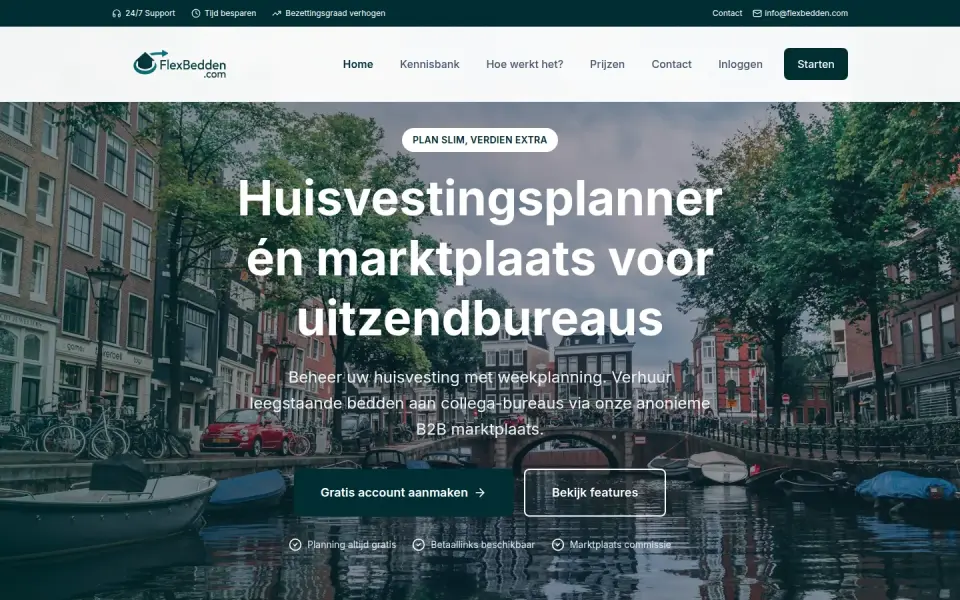
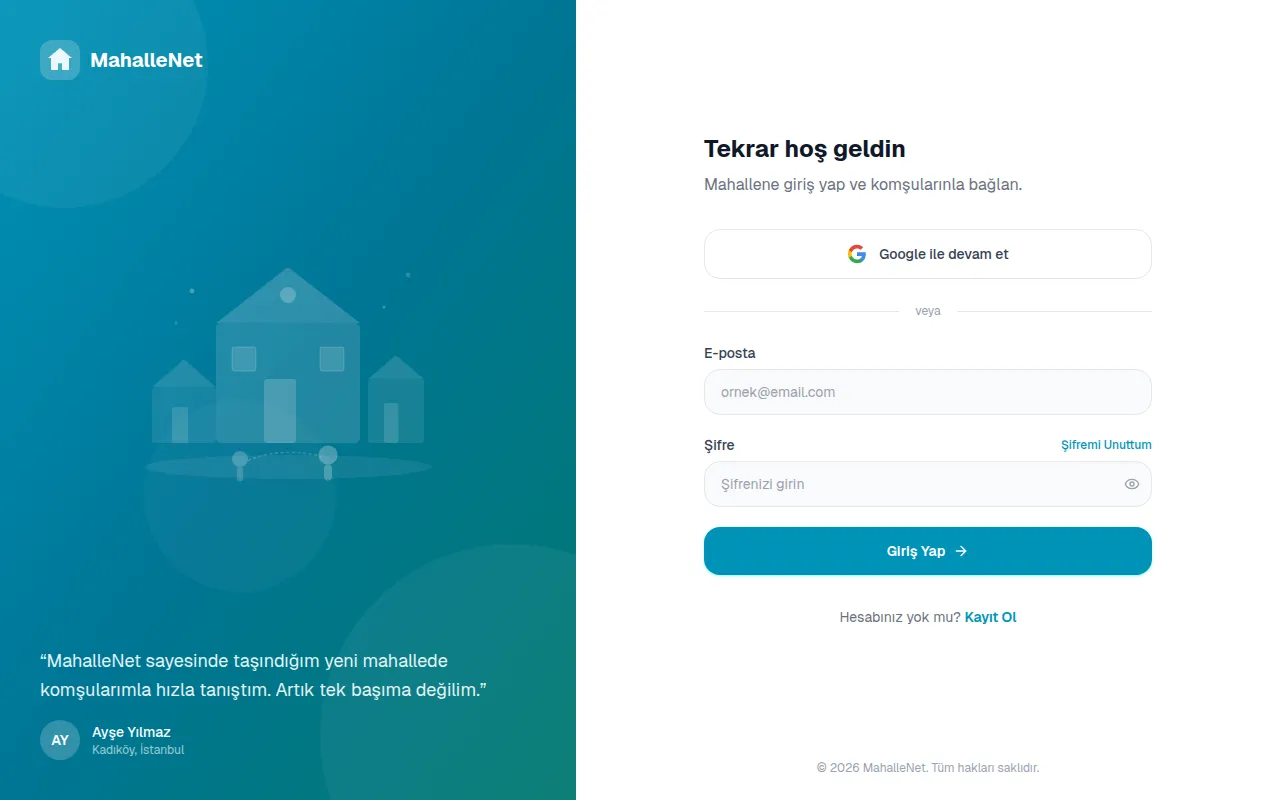
For FlexBedden and Mahallem we built platforms that move with the number of users without performance dropping off. When setting up business accounts and invoicing we align with the requirements the Chamber of Commerce sets for company administration, see kvk.nl.
The idea is simple: your platform should follow your company's growth, not hold it back.
Our own base for multi-tenant SaaS: a Laravel + Filament starter, audit trail and tenant management. We build client platforms on it.
Used internally EDITORIAL · LONG-FORM ↗What we write down as we learn it. Case studies, technical write-ups, design decisions. No content marketing, just real knowledge.
42 articles RESEARCH · AI EXPERIMENTS ↗Side projects and R&D. Voice-agent prototypes, RAG pipelines, AI knowledge-graph experiments. Some become products. The rest teach us something.
455 examples in the LabA first working platform version starts after a short intake The final price depends on the number of modules, the connections to external systems and the complexity of the roles and permissions. A platform with just a dashboard and user management is cheaper than one with payments, invoicing and connections to accounting software. We prefer to work in phases: first a core that works and delivers value, then expand based on what customers actually use. That way you do not pay up front for features that later turn out to need to be different.
Data separation is the core of built for multiple clients architecture and we treat it as non-negotiable. Each tenant has a walled-off environment where queries are automatically filtered on the correct customer ID, making it technically impossible to see another company's data. This is built in at the database layer, not as a loose check a developer can forget. On top of that we log access and keep an audit trail. For platforms with sensitive data we test this separation explicitly before going live.
Yes, that is exactly why we build for growth. Because all customers run on the same codebase, a new module or feature goes out to everyone in one go as soon as you switch it on. We deliberately start with a core and expand based on what proves necessary in practice. ClaimHandler is a good example: that platform has been extended step by step since launch with invoicing, email integration and signing, without the foundation needing a rewrite. A platform that is set up well grows along with your company.