INDUSTRY · HEALTHCARE
Software for healthcare.
PWAs and web portals for youth care, wellbeing and care coordination. GDPR and NEN 7510 compliant, tested in production.
Book an intro →
PWAs and web portals for youth care, wellbeing and care coordination. GDPR and NEN 7510 compliant, tested in production.
Book an intro →Healthcare demands reliability and a human scale. Our platforms for youth care and wellbeing are designed together with care workers, not from an IT perspective.
Healthcare software is custom software that lets a care organization manage clients, records, appointments and communication within the rules that apply to this sector. The difference with ordinary business software is in the requirements: medical and special categories of personal data fall under the strictest category of the GDPR, and information security in Dutch healthcare is set out in the NEN 7510 standard.
In practice it comes down to systems that make care workers' jobs lighter rather than heavier. Good healthcare software takes administration away from the practitioner and gives the client or their network insight into what is happening. Examples from our work:
The hallmark of good healthcare software is that safety and ease of use go hand in hand. Sensitive data is airtight, while the care worker can reach it with as few clicks as possible.
Care organizations process health data, and that is the most heavily protected category under the GDPR. On top of that, NEN 7510 applies in the Netherlands as the standard for information security in healthcare. We build those requirements into the software instead of describing them afterwards in a document.
In concrete terms that means: data separated per organization in a built for multiple clients setup, roles and permissions so a support worker only sees their own clients, consent management so a client knows and decides who may see what, and logging on every access of a record. The NEN 7510 standard is available from the Dutch standardization institute, see nen.nl. We use it as the starting point for the design.
What we build in by default for healthcare software:
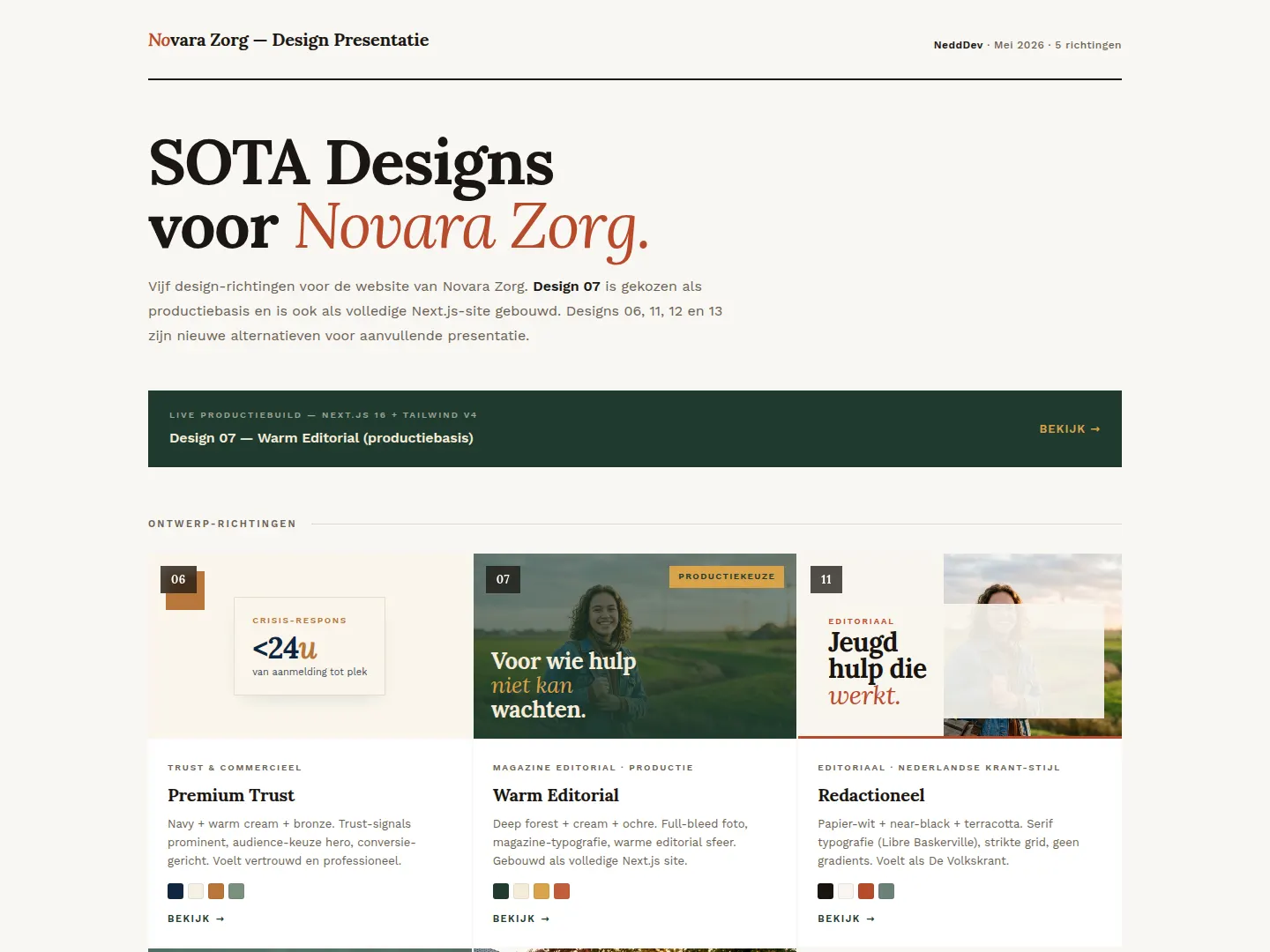
For Novara Zorg, a youth care organization, we built an environment where young people aged 6 to 23 and their support workers collaborate safely. Our SaaS architecture delivers the separation and logging the standard requires.
A lot of care happens away from the office: at the client's home, on location, during day activities. Software that only works on a desktop does not help the care worker there. So we build mobile apps and progressive web apps that let both the support worker and the participant work on the go.
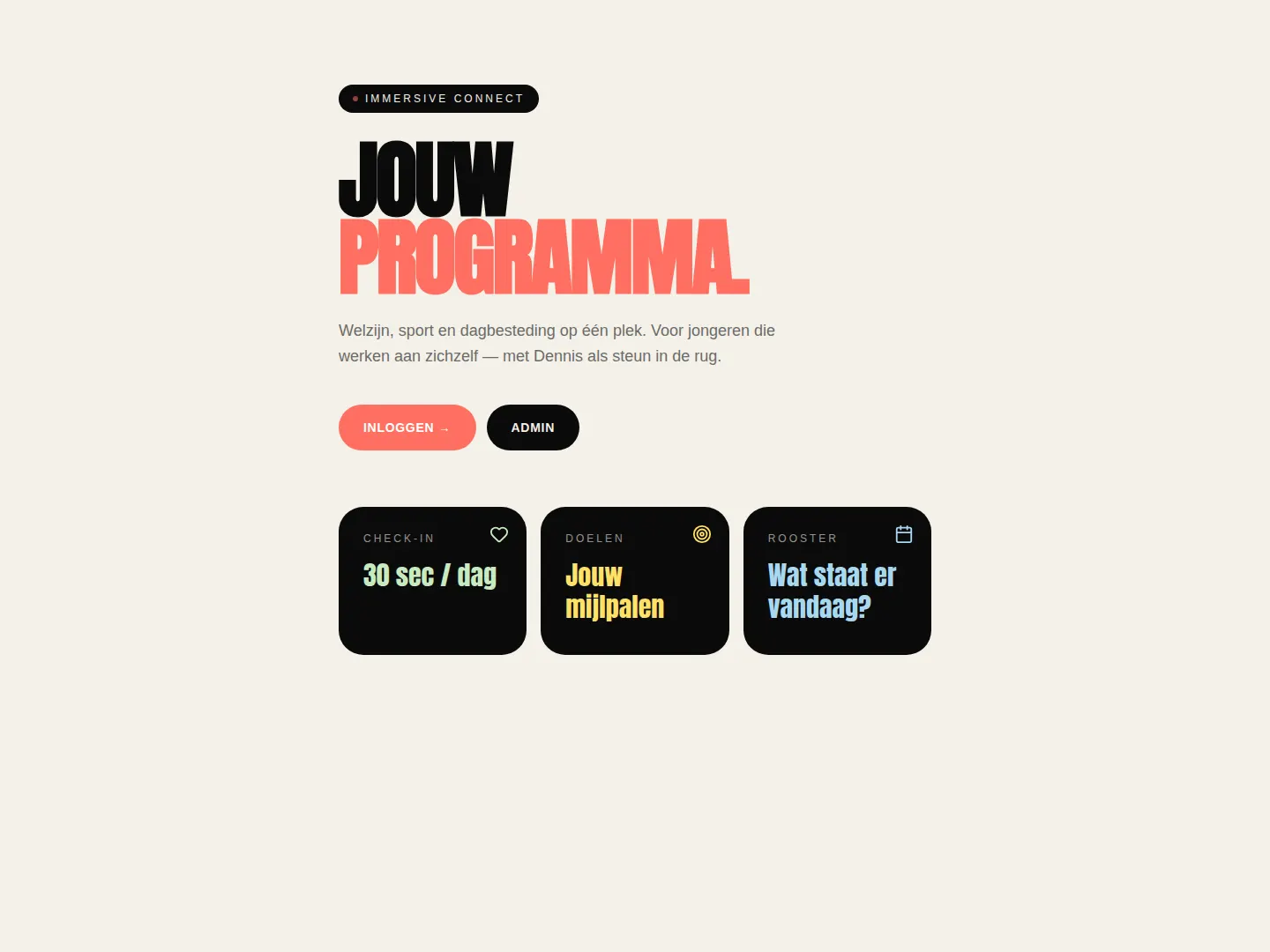
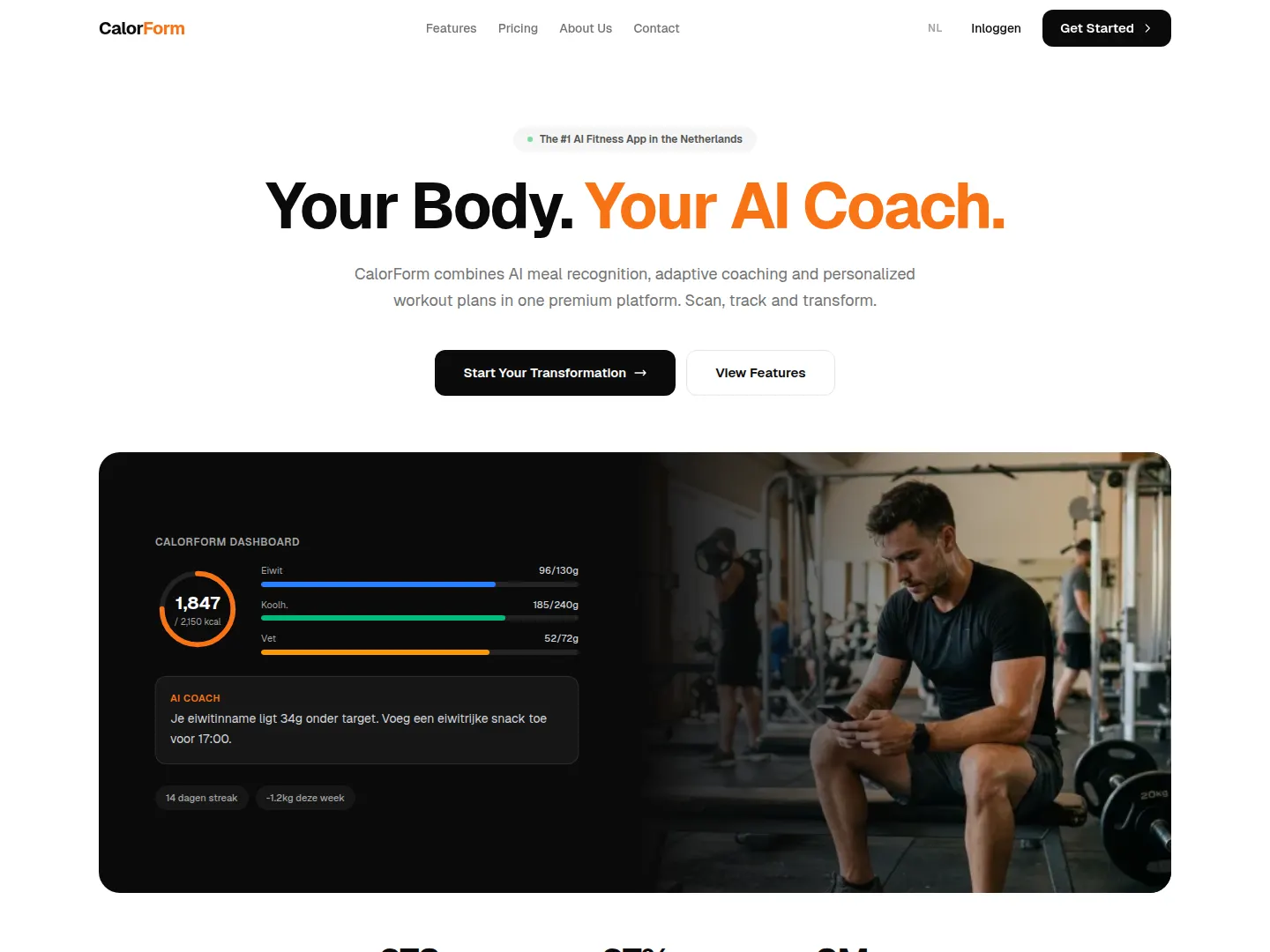
For Immersive Connect we built a platform that brings wellbeing, sport and day activities together in one app for participants and support workers. For CalorForm we made an AI fitness platform that guides users based on vetted content rather than loose answers. Our app development delivers these apps so they work the same on phone, tablet and desktop.
Does healthcare software work even if my team is not technical? Yes. We design for the care worker, not for an administrator. That means big buttons, few steps and clear language. The system comes with management and monitoring included, so nobody at the office has to take on an IT role to be able to use it.
The order in which we tackle a healthcare project:
Our own base for multi-tenant SaaS: a Laravel + Filament starter, audit trail and tenant management. We build client platforms on it.
Used internally EDITORIAL · LONG-FORM ↗What we write down as we learn it. Case studies, technical write-ups, design decisions. No content marketing, just real knowledge.
42 articles RESEARCH · AI EXPERIMENTS ↗Side projects and R&D. Voice-agent prototypes, RAG pipelines, AI knowledge-graph experiments. Some become products. The rest teach us something.
455 examples in the LabYes, and we build those requirements in rather than describing them afterwards in policy. Health data falls under the most heavily protected category of the GDPR, and NEN 7510 is the Dutch standard for information security in healthcare. We translate that into concrete measures in the system: data separated per organization, roles and permissions so a support worker only sees their own clients, consent management that keeps the client in control, logging on every access and encryption of data at rest and in transit. The standard itself is available from the Dutch standardization institute and we take it as the starting point for the design. That way you can show during an audit or incident who had access to which data and why.
Yes, and that is often exactly the point. A client portal gives the client and their network, for example parents in youth care, insight into appointments, documents and progress. That takes phone calls and emails away from the care worker and gives the client control. We handle that with consent management: the client decides who may see what, and every access is logged. For Novara Zorg we built an environment where young people and their support workers collaborate safely. The starting point is always that the client comes first without security suffering for it. What the client sees is exactly what they are allowed to see, no more and no less, and that is set per role and per consent.
It can, provided it is set up carefully. We let an AI coach answer only based on recorded, vetted content through RAG, so the system does not guess about medical matters from memory. For sensitive data we choose models that run inside the EU where needed, so data does not leave the jurisdiction. We also log every processing step and build in a fallback for when the model is uncertain. For CalorForm we built an AI fitness platform that guides users this way. The important thing is that an AI coach supports the care worker and does not replace them: responsibility for care decisions stays with the professional, and the software is transparent about that toward the user.
A first working version is usually live within 8 to 12 weeks, after a short intake We work in short sprints with weekly demos, so you see the system grow and can steer before it is finished. The security to NEN 7510, the consent management and the logging we build in from the first week, not as a final touch. In the first weeks after go-live we watch along with real care workers, because that is the moment you find out whether the app holds up during a busy working day too. An organization-wide platform with multiple modules naturally takes more time, but we split that into components that deliver value on their own, so every finished module immediately takes work off your hands.